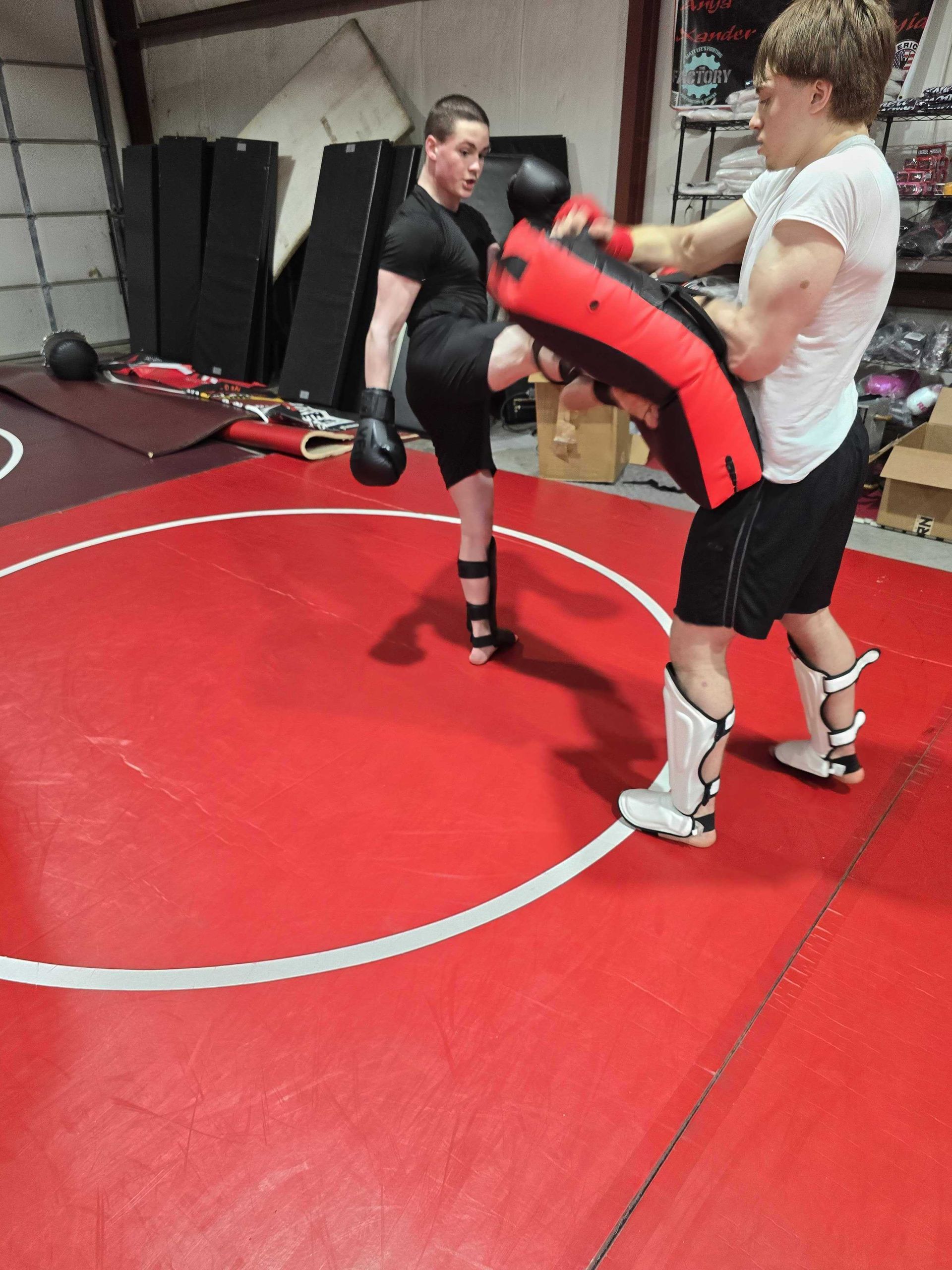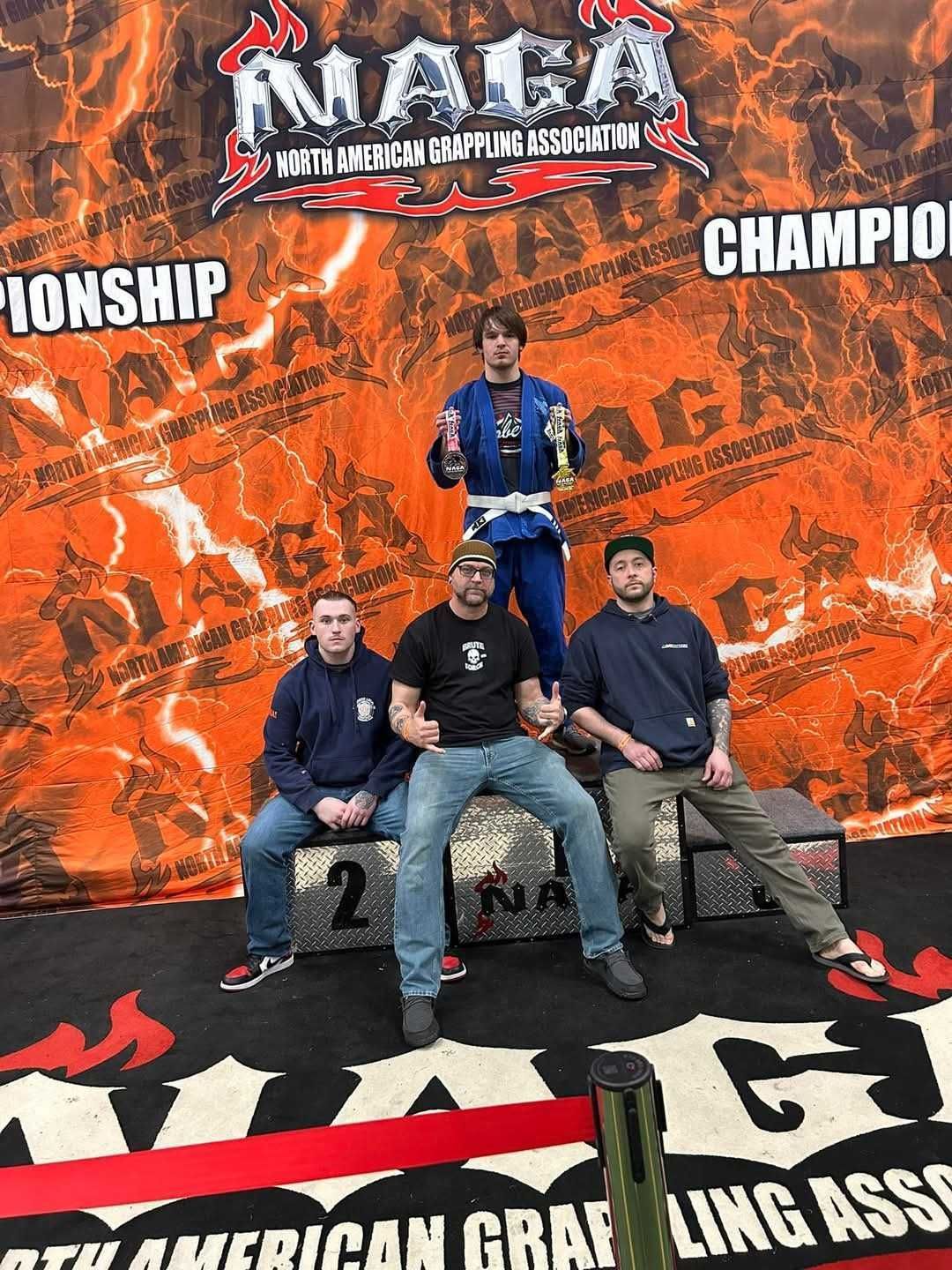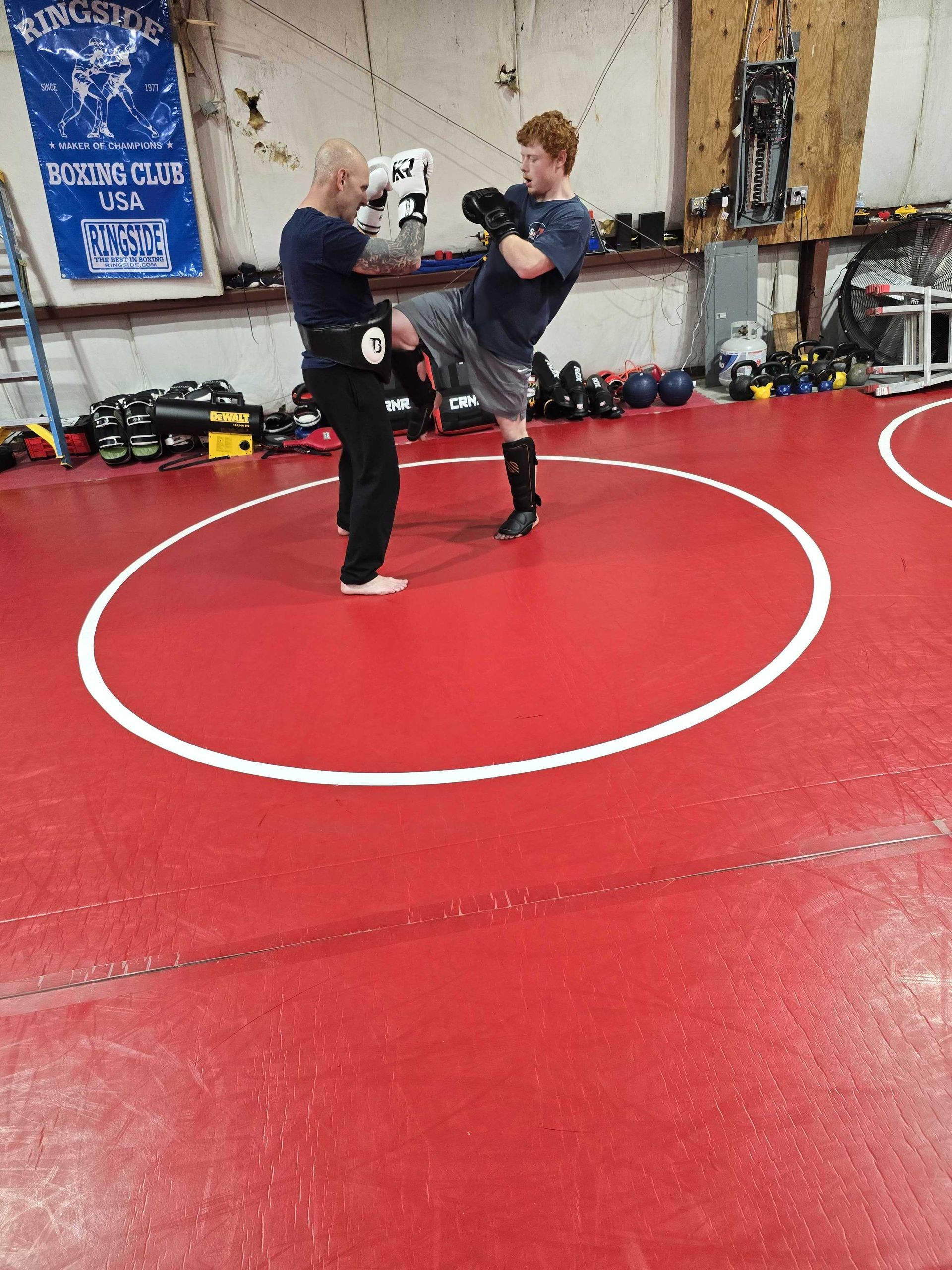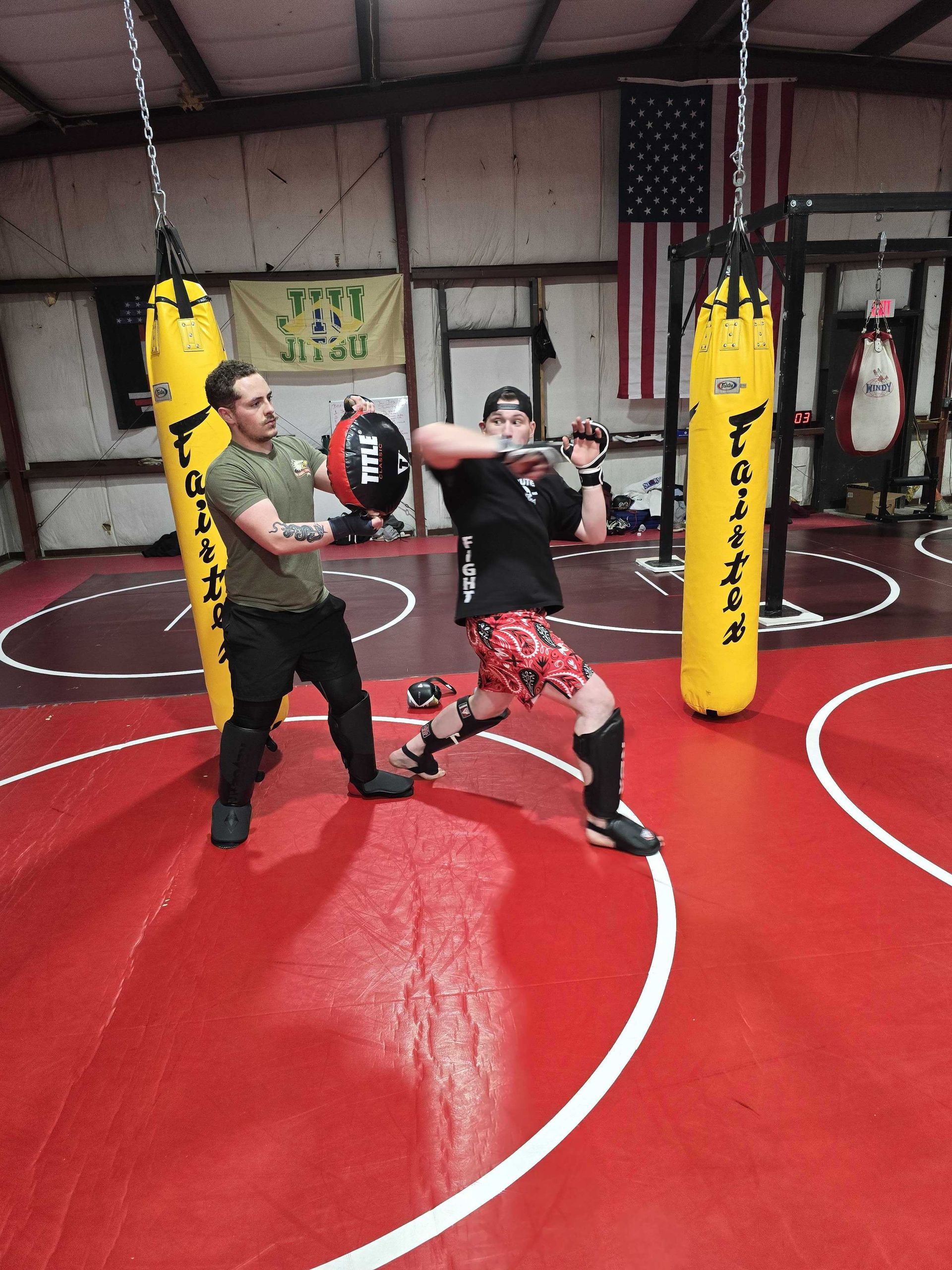
A clear first-month roadmap turns jiu jitsu from confusing to doable, even if you are brand new and a little nervous.
Starting jiu jitsu as an adult is exciting, but the early learning curve can feel steep if you do not know what matters most. We keep it simple on purpose: you learn the positions, movements, and escapes that let you stay safe and make smart decisions under pressure. Once that foundation is steady, everything else in jiu jitsu becomes easier to understand.
In Orange, MA, most adults are not looking to collect a hundred techniques. You want a reliable set of skills you can remember on a tired Tuesday, that work for self-defense, and that build real fitness along the way. Our approach is fundamental-first and self-defense focused, which means we care just as much about your ability to escape bad spots as we do about submissions.
This guide lays out the top jiu jitsu techniques every beginner should master first, plus how we structure training so you can actually retain what you learn and use it confidently.
Start with the map: the core positions you must recognize
Before you worry about submissions, you need a mental map. Positions are the map of jiu jitsu, and beginners improve faster when you can name where you are and what the goal is. A lot of anxiety disappears the moment you realize, oh, I am in side control and my job is to frame, make space, and recover guard.
Here are the core positions we want you to recognize quickly:
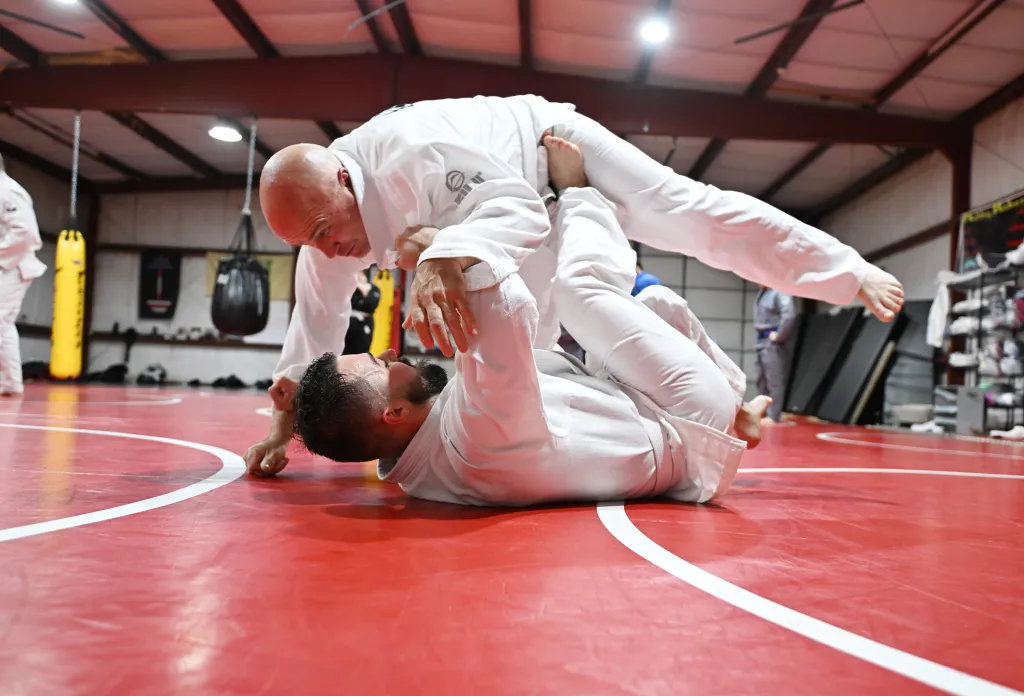
• Guard: you are on your back using your legs and hips to control distance and protect yourself.
• Mount: you are on top, sitting over the hips, with strong control.
• Side control: you are across the chest and hips, pinning and limiting movement.
• Back control: you are behind your training partner, controlling with hooks and seatbelt grips.
• North-south: you are over the head and torso, often a transition from side control.
When you know these positions, you can stop guessing. You start thinking in goals like recover guard, get to your side, or secure top control instead of just reacting.
Guard basics: closed guard first, then simple open guard
Guard is where many beginners spend time, especially in early sparring. We like closed guard early because it slows things down and gives you a safe framework: legs closed around the waist, posture control, and a clear idea of what you are protecting.
Your early guard priorities are not flashy. They are practical:
- Break posture and keep your partner from sitting tall.
- Keep your knees between you and the pressure when guard opens.
- Learn to angle your hips so you can attack or sweep instead of pushing straight.
Those habits are the difference between feeling stuck on your back and feeling like you have options.
Side control and mount: how to control without muscling
Top control is a major self-defense advantage. In jiu jitsu, you learn to pin with body mechanics, not brute strength. Side control teaches you to use shoulder pressure, hip placement, and crossfaces to limit movement. Mount teaches balance, base, and how to stay heavy without being reckless.
As a beginner, we focus on two questions:
- Can you hold the position for a few breaths without scrambling?
- Can you transition if your partner starts escaping?
That is real progress. Submissions come more naturally when your control is calm and consistent.
Back control: the safest place to finish
Back control is one of the most effective positions in jiu jitsu because it is hard to shake off when done correctly and it lines up with a high-percentage choke. Beginners do not need ten variations here. You need clean fundamentals: seatbelt control, hooks, and patience.
We teach you to win the hand-fighting first. If you can protect your choking hand and stay glued to the back, you will understand why this position is such a cornerstone.
The three movements that make everything work
If you only drilled techniques, you would still struggle without core movement. Movement is what turns knowledge into ability. These are the three fundamentals we want you practicing constantly because they show up everywhere, from escapes to guard retention to standing up safely.
Shrimping (hip escape)
Shrimping is the most repeated movement for beginners for a reason. You use it to create space, recover guard, and turn bad positions into manageable ones. In plain terms, it is your ability to move your hips away from pressure while keeping your frames in place.
We coach shrimping as a skill, not a warmup you rush through. If your hip escape gets sharper, your entire jiu jitsu improves.
Bridging (upa)
Bridging is how you off-balance someone on top and create openings. It is not just a big push. A good bridge is timed, angled, and connected to a trap. You will use bridging in mount escapes, in recovering guard when someone is heavy, and even in some sweeps.
When beginners struggle here, it is usually because the bridge is straight up without direction. We build the habit of bridging toward the corner, not the ceiling.
Technical stand-up
Technical stand-up is the safest, most reliable way to get back to your feet while protecting your head and maintaining distance. For adults who care about self-defense, this matters a lot. You learn to post a hand behind you, keep a barrier with your lead hand, and stand without turning your back or stepping into a grab.
If you only learn one standing skill early on, make it this. It is simple, practical, and surprisingly empowering once it clicks.
The first escapes every beginner should drill until they are boring
Most adults start jiu jitsu worried about being stuck underneath someone heavier. That is normal. Our solution is to give you a small set of escapes you can actually remember, then drill them enough that your body responds without panic.
Mount escape: trap and roll (upa)
Trap and roll is one of the first mount escapes we teach because it matches the logic of self-defense: trap an arm, trap a foot, bridge and roll. The key is not rushing. You need to isolate the post so the bridge works.
Beginner detail that matters: if you try to roll someone who still has a wide base, you will burn energy fast. We teach you to set the trap first, then commit.
Elbow-knee escape: recover guard from mount
The elbow-knee escape is a long-term staple because it teaches you the relationship between frames and hip movement. You frame, you shrimp, you insert a knee, and you rebuild guard. It is not dramatic, but it is dependable.
Once you can elbow-knee escape consistently, you start feeling less trapped, and you also start understanding guard retention on a deeper level.
Side control survival: frames, hip escape, and re-guard
Escaping side control is not about bench-pressing someone off you. It is about building frames, getting onto your side, and using your hips to make space. We coach a simple sequence:
- Frame at the neck and hip to prevent chest-to-chest pressure.
- Shrimp to create a pocket of space.
- Bring your knees back inside to recover guard.
Side control teaches patience. You learn to breathe, build structure, and escape in steps instead of thrashing.
Headlock escape: a real-world priority
In self-defense, headlocks happen. In training, we address common head-and-arm control situations so you understand posture, hand-fighting, and how to avoid getting pulled off balance. The goal is not to fight harder. It is to get your head safe, create space, and improve position.
For many adult beginners, this is the first time training feels directly connected to real life.
High-percentage beginner submissions worth learning early
We keep your early submission list tight. A beginner does not need a dozen fancy options. You need a few techniques that work from strong positions, teach good mechanics, and can be applied safely in training.
Rear naked choke (from back control)
The rear naked choke is a cornerstone of jiu jitsu because it is effective and does not rely on strength when done correctly. We teach it with a big emphasis on control and safety: proper hand placement, clean finishing mechanics, and immediate respect for the tap.
This is also where you learn that hand-fighting is everything. The choke is often the easy part once your control is solid.
Straight armbar (from mount or guard)
The straight armbar teaches leverage, hip control, and the importance of keeping the elbow line. Beginners tend to focus on pulling the arm, but the real power comes from controlling posture and using your hips.
We like teaching the armbar from mount because the position is stable and the steps are clear. You learn to isolate an arm, climb to high mount, and finish with controlled pressure.
Americana and kimura (from side control or mount)
Americana and kimura shoulder locks help beginners understand grip structure, elbow positioning, and how to use the floor as part of your control. They also connect well to top pins like side control and mount, which means you are learning to attack from positions you should already be able to hold.
Safety is a priority here. We emphasize slow finishing mechanics and awareness of shoulder sensitivity. If your partner taps, you stop. No exceptions.
Guillotine choke (from standing or front headlock)
The guillotine is a common self-defense and MMA-adjacent choke because it can appear during clinches, shots, or scrambles. For beginners, we focus on doing it correctly rather than squeezing wildly. Good positioning matters more than arm strength.
You also learn when not to use it. Sometimes the smartest move is improving position instead of chasing the neck.
Triangle choke (introduced once your guard is steadier)
Triangle is usually not the first submission we push hard, but it is an important one once you can control posture and angle your hips. It teaches you to use your legs as a powerful tool, and it rewards good guard fundamentals.
When beginners struggle with triangle, it is usually because the angle is wrong. We coach the angle first, then the lock.
Two beginner sweeps that teach you how to reverse position
Sweeps are where jiu jitsu starts to feel like chess. You go from defending to attacking by changing the position, not by out-muscling someone. We teach a couple of sweeps early because they connect directly to closed guard basics and help you understand timing.
1. Scissor sweep: you break posture, shift angle, and use a slicing leg motion to tip your partner and come up on top.
2. Hip bump sweep: you sit up, threaten posture, and drive your hips through to knock your partner over and take mount.
These are not just techniques, they are lessons. You learn to control posture, create an angle, and commit to the movement when the moment is right.
What your first 3 to 6 months can look like in our fundamentals path
Adults learn best with structure, especially when life is busy. We build a beginner roadmap so you know what you are working on and why. Here is a realistic progression we use, and yes, it is okay if you move faster or slower. Consistency matters more than speed.
• Month 1: shrimping, bridging, technical stand-up, closed guard posture control, basic mount escapes
• Months 2 to 3: side control survival, back control basics, rear naked choke mechanics, armbar setup, simple sweeps
• Months 4 to 6: linking positions, adding options like kimura and Americana chains, improving guard retention, increasing positional sparring rounds
We also use positional sparring early because it keeps your focus tight. Instead of free-for-all rounds, you start in mount or side control and practice one goal. Beginners tend to learn faster that way, and it feels safer because you know the context.
FAQ for adult beginners in Orange, MA
Do I need to be in shape before starting jiu jitsu?
No. Training is how you get in shape. We scale intensity, help you pace yourself, and focus on good mechanics so you can build fitness without feeling crushed.
Is jiu jitsu safe for adults in their 30s, 40s, or 50s?
Yes, when training is coached well and partners respect control. We prioritize tapping early, progressive sparring, and technique-first learning so you can train for the long run.
Should I start in gi or no-gi?
Many beginners find the gi helpful because grips slow things down and make positions clearer. We can guide you based on your goals and what classes fit your schedule.
How soon will I feel more confident for self-defense?
Most adults feel a noticeable difference within a few months if you train consistently and focus on escapes, posture, and a couple of reliable finishes like the rear naked choke.
What should I expect in my first class?
Expect movement drills like shrimping and bridging, a technique breakdown with partner drilling, and controlled rounds that match your experience level. You will work, but you will not be thrown into the deep end.
Ready to Begin
If you want jiu jitsu to feel practical, organized, and achievable from day one, we built our fundamentals to deliver exactly that. You will learn the positions that keep you safe, the escapes that remove panic, and a short list of submissions that make sense for real-world control.
We teach adult jiu jitsu in Orange with a clear beginner roadmap, careful coaching, and a training culture that values safety and steady progress. That is the heart of what we do at Roberts Family Mixed Martial Arts, and it is why so many new students stick with it once they get a few classes under their belt.
Develop real Brazilian jiu jitsu skills through structured training by joining a free jiu jitsu class at Roberts Family Mixed Martial Arts.
ACCESS OUR SCHEDULE
& EXCLUSIVE WEB SPECIAL
Secure your spot and get started today with our EXCLUSIVE offer!