
Confidence is not a personality trait you are born with, it is a skill you can practice and build.
Confidence is one of those things people want more of, but it is hard to “think” your way into it. We see it in kids who freeze up when they are put on the spot, in teens who second-guess everything, and in adults who look successful on the outside but feel uncertain under pressure. jiu jitsu works because it gives you a repeatable way to build real capability, not just motivation.
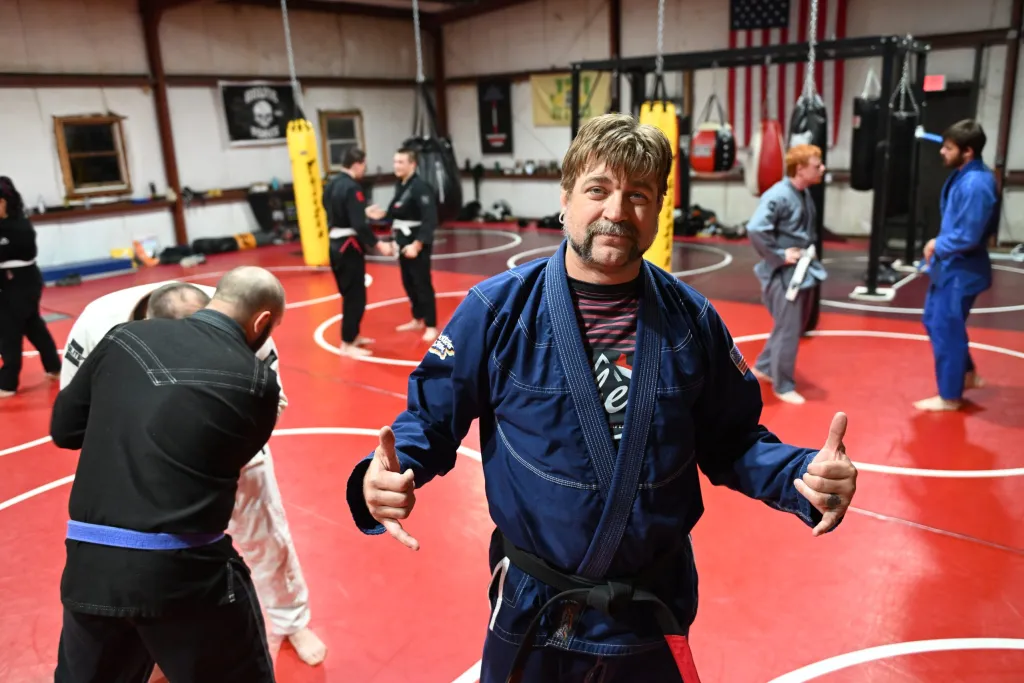
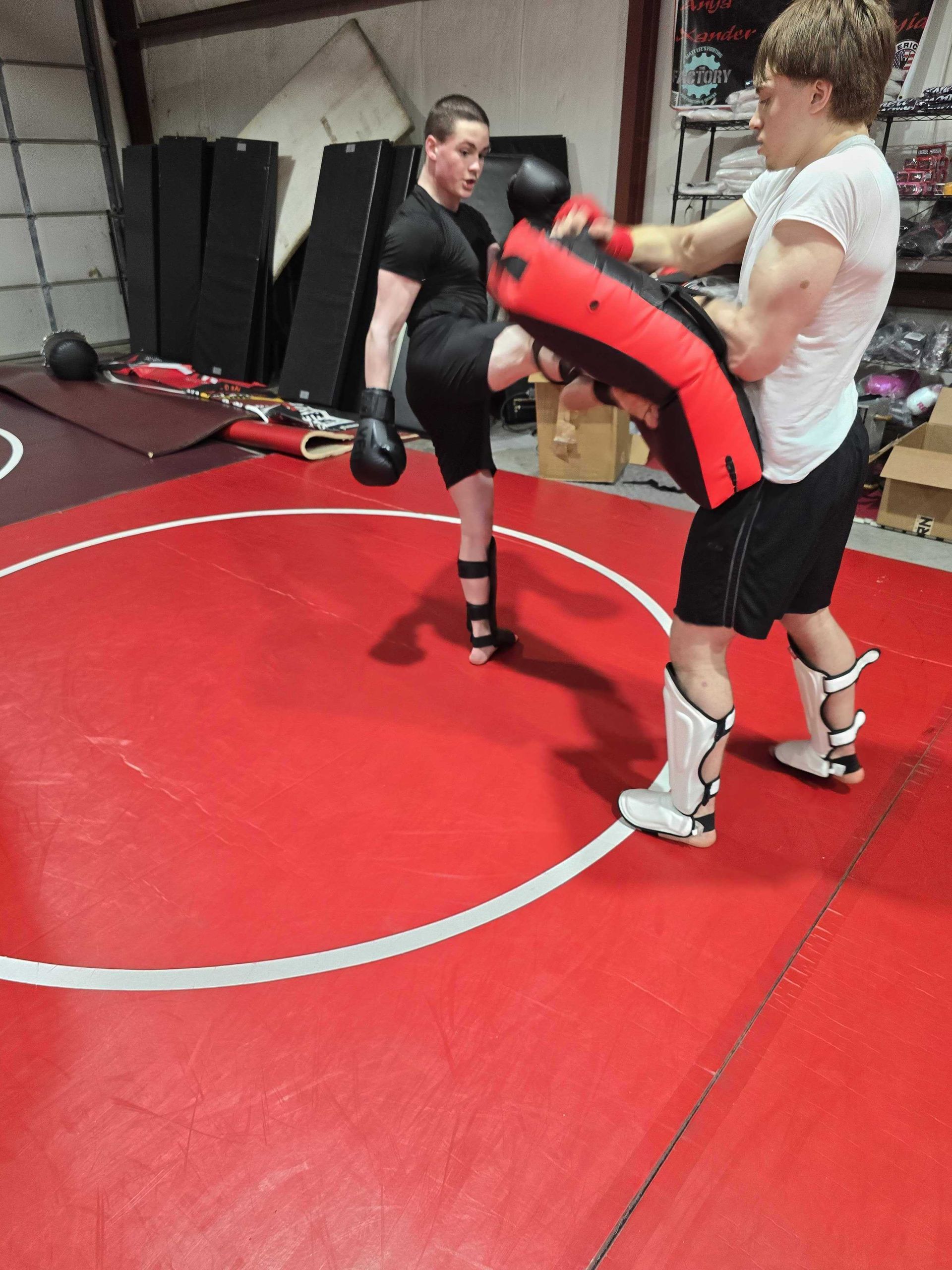
In our classes, confidence shows up in small moments first. You learn how to breathe while someone is trying to hold you down. You solve a problem you could not solve last week. You realize you can stay calm while your brain is telling you to panic. That is not hype, it is practice.
Research backs up what we watch happen on the mats. In a 2024 study, 87.6% of practitioners agreed that Brazilian jiu jitsu improved confidence. Parents also report big changes for kids, with a 2024 survey showing 96.4% seeing improved confidence and 87.5% seeing reduced anxiety after starting training. The most encouraging part is that the benefits tend to grow the longer you stick with it, which makes jiu jitsu a confidence engine you can keep using at any age.
The science of confidence in jiu jitsu
Confidence is often misunderstood as bravado, but healthy confidence is more like trust. It is the belief that you can handle whatever shows up, even if it is uncomfortable. jiu jitsu builds that trust through measurable progress, controlled pressure, and a supportive training culture.
One reason jiu jitsu works so well is that it is honest. If a technique is off, you feel it immediately. If your timing improves, you feel that too. That feedback loop is powerful because it replaces vague “I hope I can” thoughts with specific evidence: “I escaped that position,” “I stayed calm,” “I tried again.”
A rank-based research study also found that more experienced practitioners had higher resilience, self-efficacy, self-control, and life satisfaction than beginners, while not showing higher aggression. That matters for families who want confidence without attitude, and for adults who want calm competence instead of ego.
Why progress feels so real on the mats
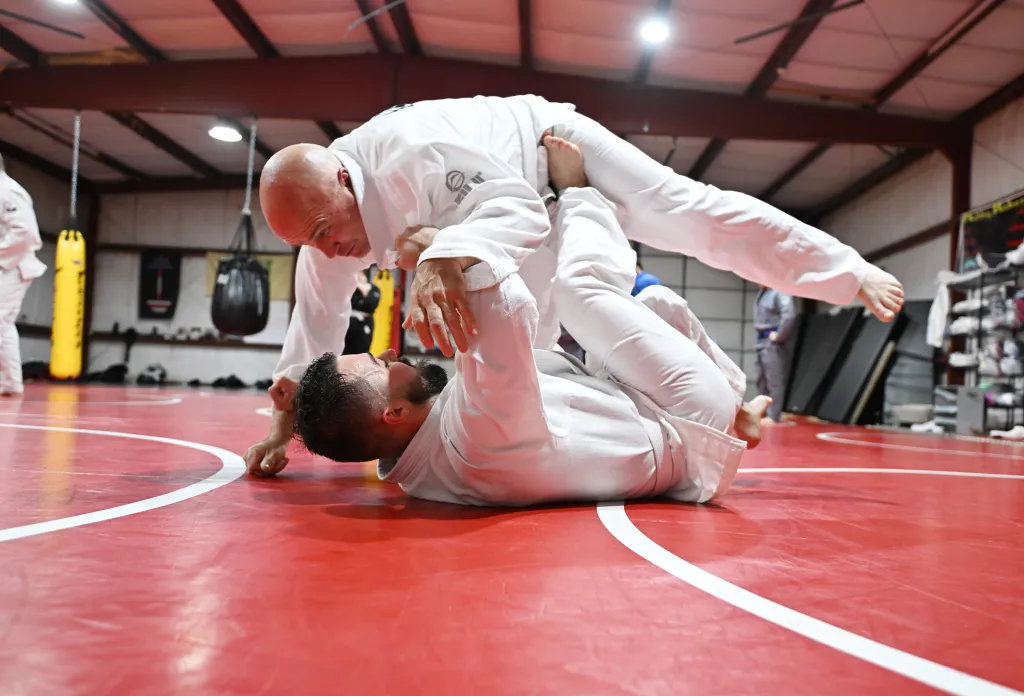
Many activities build confidence in theory, but jiu jitsu does it in a very concrete way. You are not just imagining success. You are practicing skills against real resistance, with partners who are trying (safely) to stop you.
Here is what that creates over time:
- You learn to stay present in discomfort instead of avoiding it
- You build problem-solving skills under pressure, not just when relaxed
- You develop body awareness and coordination that carries into daily life
- You collect small wins that add up into self-belief
It is also surprisingly mentally engaging. People come in for self-defense or fitness, then realize the puzzle-solving part is what keeps them coming back.
Kids: building confident, capable habits early
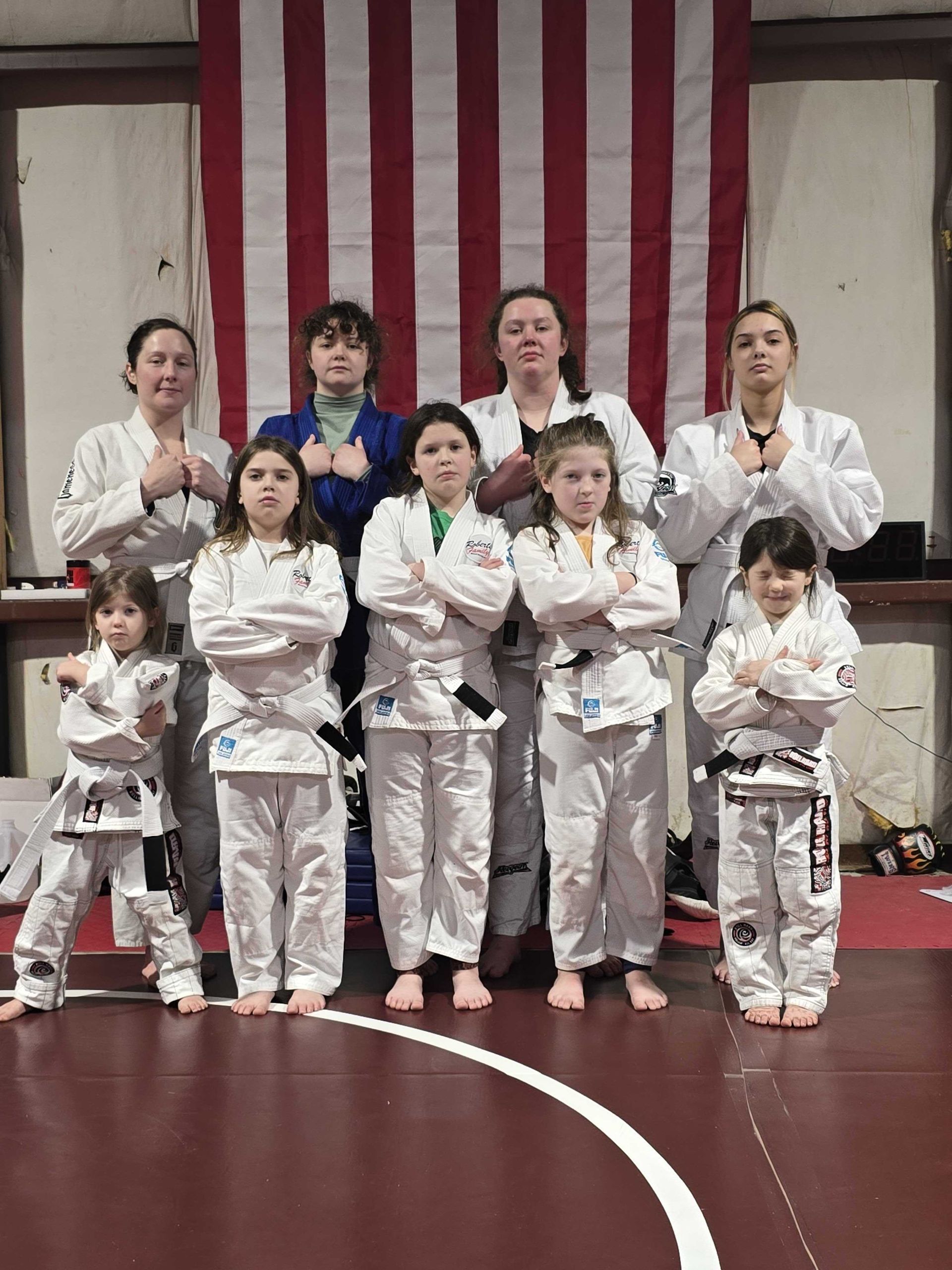
For kids, confidence is not just about standing tall. It shows up in how your child handles mistakes, transitions, and social pressure. We focus on helping kids practice courage in manageable doses, so confidence becomes normal instead of something that appears only on “good days.”
Parents often tell us the first change they notice is emotional. A child who used to shut down starts trying again. A child who hated being corrected starts listening without getting upset. A child who was nervous in new environments begins walking into class like it belongs to us, too.
The data is strong here. In that 2024 survey, parents reported improvements not only in confidence (96.4%) but also commitment (92.8%), mood (92.8%), and life skills transfer (96.4%). When kids experience structured challenge and supportive coaching, the skills do not stay on the mats.
Confidence without aggression (a common concern)
We hear this question a lot: will training make my child more aggressive? Our approach is built around control, respect, and accountability. And research supports that worry is often misplaced. Studies comparing beginners to advanced belts found major gains in mental strength and self-control without increases in aggression.
In practice, jiu jitsu is built around tapping, resetting, and learning. Kids learn that strength without control is not the goal. They learn how to win the right way, and how to lose without melting down. That is real confidence.
Teens: calm under pressure when life gets louder
Teen years can feel like a constant test. Social dynamics, school pressure, and the feeling of being watched can make even confident teens second-guess themselves. jiu jitsu gives teens a place where effort matters more than image, and where the rules are clear: show up, learn, improve.
We like jiu jitsu for teens because it trains composure. When a round gets tough, you cannot fake calm. You have to build it. Over time, teens learn that nerves are not a stop sign. Nerves are just information.
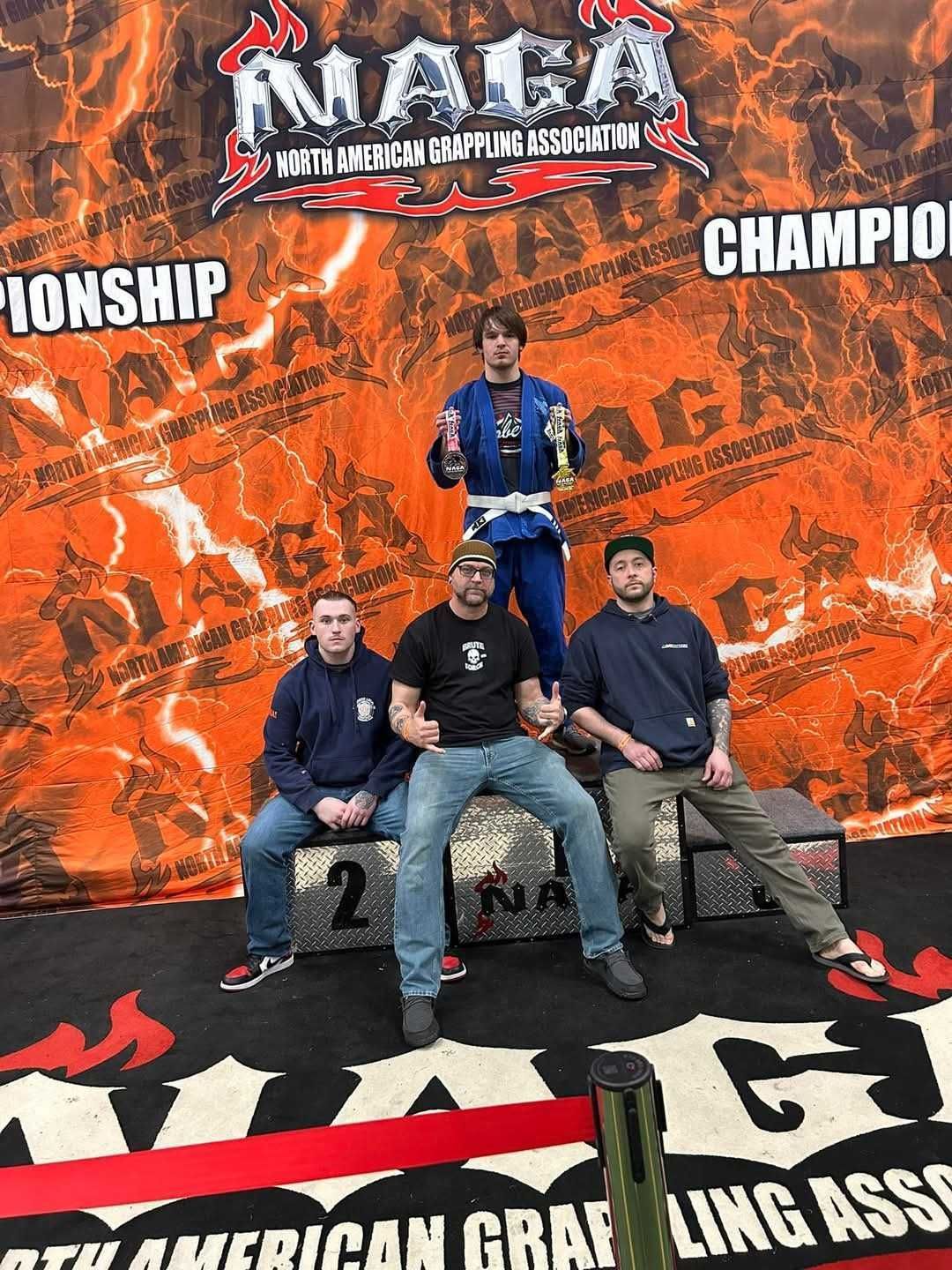
This is where the belt and stripe system helps. Teens get tangible milestones, not vague praise. Those trackable wins feed self-efficacy, and research links structured progression to increased confidence and life satisfaction.
What teens learn that transfers to school and friendships
The best confidence is useful confidence. Teens often carry these lessons into everyday life:
- Speaking up feels easier after practicing assertiveness in training
- Handling criticism improves because feedback is normal in class
- Stress feels more manageable because our rounds simulate pressure safely
- Resilience grows because quitting is not the default response anymore
Sometimes the change is subtle. A teen starts making eye contact. A teen raises a hand in class. A teen tries out for something that used to feel intimidating. Those moments matter.
Adults: confidence that shows up at work, at home, and in your own head
Adults often come in saying they want to “get back in shape,” but what they usually mean is deeper. They want to feel capable again. They want to feel strong, not just tired. They want a skill they can point to and say, “I earned that.”
adult jiu jitsu Orange MA is also appealing because it gives your training a purpose. You are not just moving weights or counting miles. You are learning how to control space, manage balance, and solve problems with another person actively resisting. That is a different kind of confidence than traditional fitness.
Research supports this across ages and experience levels. The “lifelong skills” work in Brazilian jiu jitsu highlights confidence, resilience, and wellbeing benefits that tend to increase the longer people train. That matters if you are starting in your 30s, 40s, 50s, or beyond. You are not “late.” You are simply beginning.
The physical side supports the mental side
It is hard to feel confident in a body that feels fragile, stiff, or exhausted all the time. jiu jitsu helps because it builds functional strength, mobility, and conditioning in a way that feels practical. You get stronger grips, steadier balance, better hip movement, and a more athletic posture without needing to be an athlete to start.
When you feel physically capable, your brain gets the message. That message often becomes calmer decision-making, better boundaries, and less second-guessing.
Why jiu jitsu builds confidence faster than you expect
Confidence grows when your brain can point to evidence. In jiu jitsu, evidence shows up constantly: you escape a hold, you defend a position, you remember a sequence, you stay calm when you used to tense up. You do not need perfect talent. You need reps.
A useful way to think about progress is in stages. Here is what many beginners experience when training consistently:
1. Weeks 1 to 4: you learn how to move safely, tap early, and understand basic positions
2. Months 2 to 3: you start recognizing patterns and surviving longer with more calm
3. Months 4 to 6: you notice real improvements in fitness, reactions, and confidence in stressful moments
4. Beyond 6 months: you start trusting yourself, because you have a record of showing up and improving
You might feel a little awkward at first. Almost everyone does. But that awkwardness is part of the process, and it fades quicker than most people expect.
Confidence for first responders and high-stress careers in central Massachusetts
In a region like ours, many people work jobs that demand steady nerves: healthcare, education, trades, public safety, and shift work that can wear you down. jiu jitsu gives you a controlled place to practice staying calm while your body is working hard.
Research on veterans and first responders suggests training can increase confidence, reduce anxiety, and build a sense of accomplishment and self-esteem, with the structured progression of ranks playing a role. Work on law enforcement also shows positive links between grappling experience and confidence in handling use-of-force situations, plus better decision-making under pressure.
We are careful about how we train this. Our focus is safety, control, and responsible skill development. The goal is not to make you “tough.” The goal is to make you steady.
What makes our classes in Orange work for beginners
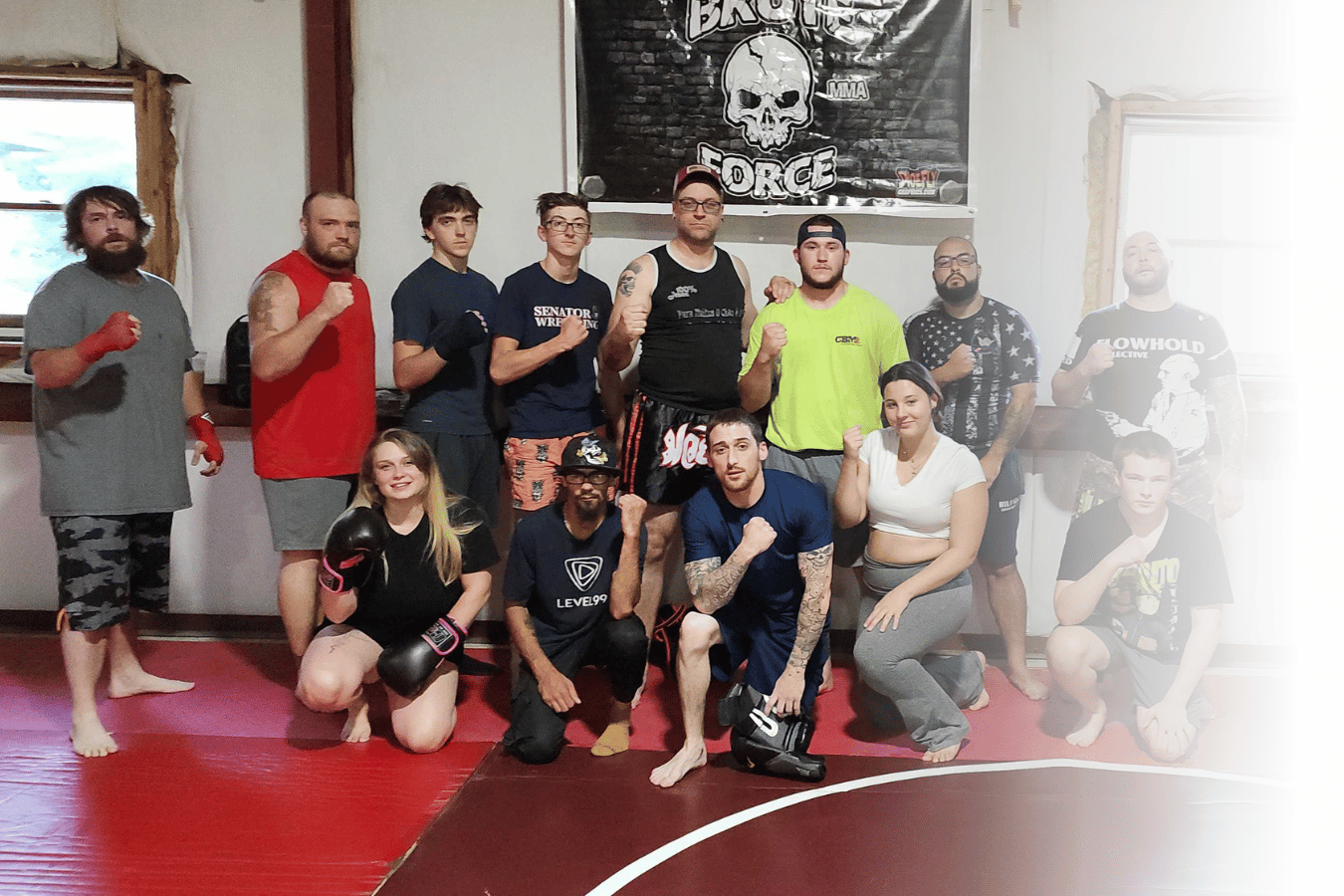
A confidence-building program has to be welcoming, structured, and realistic. If class feels chaotic or intimidating, people quit before the benefits kick in. We build our sessions so you can learn step by step, even if you have never done a martial art before.
In our training, we emphasize:
- Clear fundamentals before complex techniques
- Partners who help you learn instead of trying to “win” every round
- A culture where tapping is normal and respected
- Coaching that gives you one or two focused improvements at a time
If you are searching for jiu jitsu Massachusetts options and you want a place where you can actually settle in and grow, the environment matters as much as the curriculum.
Start Your Journey with Roberts Family Mixed Martial Arts
The most reliable confidence boost is the one you can repeat every week. jiu jitsu gives you that, because it builds real skills, real composure, and real proof that you can handle hard things without falling apart. If you want confidence for your child, your teen, or yourself, the path is straightforward: show up, learn, and let the process do its job.
That is exactly what we aim to deliver at Roberts Family Mixed Martial Arts, right here in Orange, MA: a safe, structured place to train, progress, and walk out a little more capable than you walked in.
Strengthen both body and mind through consistent jiu jitsu training by joining a free jiu jitsu class at Roberts Family Mixed Martial Arts.
ACCESS OUR SCHEDULE
& EXCLUSIVE WEB SPECIAL
Secure your spot and get started today with our EXCLUSIVE offer!