Adult Jiu-Jitsu gives you a workout you can feel and a skill you can prove, one class at a time.
If you have ever tried to get back into shape as an adult, you already know the hardest part is not the first week. It is sticking with something once motivation fades and life gets busy again. Adult Jiu-Jitsu tends to solve that problem because every session has a purpose: you are not just sweating, you are learning.
We see it all the time in Orange, MA. Motivated beginners walk in looking for a practical way to train, and they stay because the training feels real, the progress is measurable, and the community makes consistency easier. You do not need a background in sports or martial arts to start, and you do not need to be “tough” to belong here.
What Adult Jiu-Jitsu actually is (and what it is not)
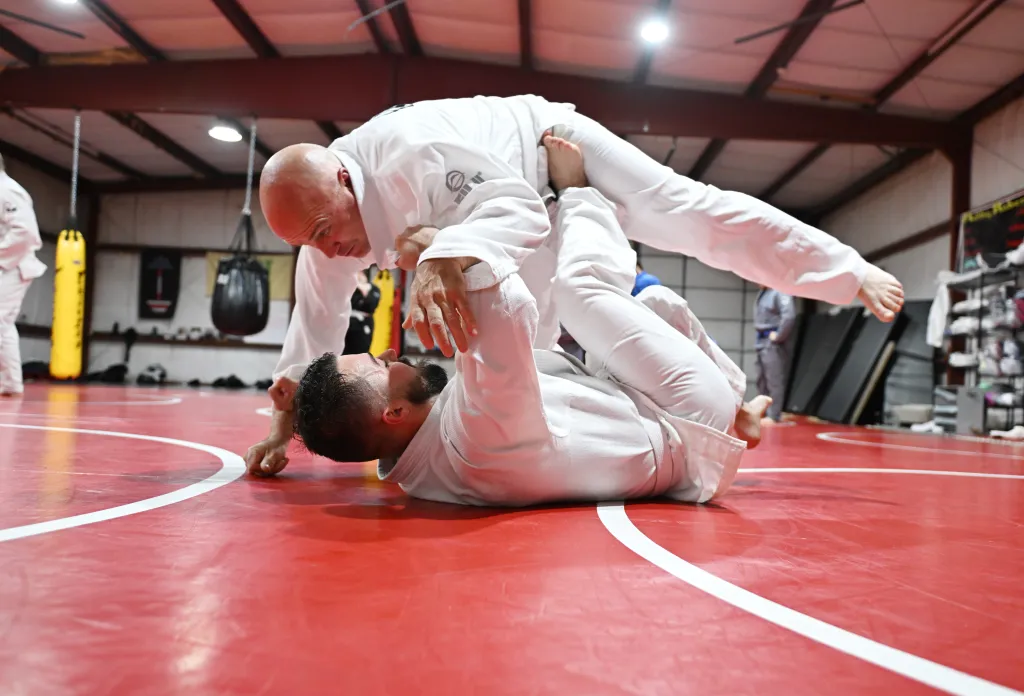
Adult Jiu-Jitsu is grappling. That means you learn how to control distance, grips, posture, balance, and positioning in close range. You will practice how to escape pins, improve your position, and apply submissions with control. If you are picturing chaotic brawling, that is not what we train for in a typical class.
It is also not “magic self-defense” that guarantees outcomes. Real life is unpredictable. What Adult Jiu-Jitsu does offer is a systematic way to build skills for close-contact situations, develop composure under pressure, and get comfortable solving problems when someone is resisting you. That combination is a big reason adults choose it over another treadmill plan they will quit in a month.
Why beginners do not need prior experience to start
A lot of adults assume they need to get in shape before they try Adult Jiu-Jitsu. In practice, getting in shape is part of the process. We coach beginners to focus on fundamentals that do not depend on being the fastest or strongest person in the room.
Brazilian Jiu-Jitsu relies heavily on leverage, positioning, timing, and technique. When you learn how to frame properly, how to use angles, and how to control hips and shoulders, you start to feel the “light bulb” moments pretty quickly. Those moments keep motivated beginners coming back, because progress does not stay theoretical for long.
We also structure learning progressively. You begin with safer, repeatable movements and positional goals, then build toward more resistance as your comfort level grows. It is a skill, not a test you either pass or fail on day one.
Fitness with a purpose: why this workout feels different
Plenty of adults can push through a workout. The bigger issue is boredom. Adult Jiu-Jitsu is physical, but the physical effort is tied to a task. You are trying to hold position, escape, sweep, or improve your base. That “goal” element changes the whole experience.
Over time, regular training can improve:
• Cardiovascular endurance, because rounds demand sustained effort and recovery
• Strength and muscular endurance, especially through gripping, framing, and controlled pressure
• Mobility and flexibility, because good movement requires hips, shoulders, and spine to cooperate
• Balance and coordination, because you learn to post, base, and transition efficiently
• Body awareness, because you feel immediately when posture breaks or alignment is off
What surprises many beginners is how honest the feedback is. If a technique works, you will know. If it does not, you will know that too, and we can fix it. That is motivating in a way that vague fitness goals sometimes are not.
Skill-based progress you can actually track
Belt rank is one way people think about progress, but it is not the only way, especially for beginners. Most adults notice meaningful improvements long before they ever worry about promotions.
Early wins often look like smaller, practical milestones: you can shrimp out of pressure without panicking, you can hold a stable base in someone’s guard, you can remember a sequence without freezing. Those are real improvements, and you feel them in live practice.
One of the reasons Adult Jiu-Jitsu is attracting motivated beginners in Orange, MA is that the learning curve is addictive in a healthy way. You learn something, you test it, you adjust it, and you watch yourself get better. It is hard not to get invested once that cycle starts.
Decision-making under pressure (the part most people do not expect)
There is a mental side to this training that beginners rarely anticipate. Jiu-Jitsu forces you to make decisions while dealing with fatigue and resistance. You cannot “think perfectly” in the comfort of your living room and expect it to transfer. You have to practice decision-making in motion.
That is why controlled live training matters. You learn when to stay calm, when to frame, when to move, and when to stop forcing something that is not working. Over time, many adults notice they handle stress better outside the academy too, not because training is a therapy session, but because you get used to solving problems under pressure without spiraling.
Practical self-defense benefits, explained honestly
Adult Jiu-Jitsu can be a valuable part of self-defense because it focuses on close-range control. Many real altercations end up tangled, off balance, or on the ground, and grappling skills can help you manage those moments.
You learn how to:
• Maintain base and posture when someone is trying to pull you off balance
• Escape common pins and holds using frames and hip movement
• Control position without relying on size alone
• Apply submissions with control in training, which reinforces mechanics and awareness
Still, we are careful about how we talk about self-defense. No martial art can promise safety in every scenario. Awareness, avoidance, and smart decision-making matter. Training gives you tools and composure, not a guarantee.
Gi and No-Gi: two formats, two beginner-friendly paths
We offer both Gi and No-Gi training, and that flexibility is a big draw for new adults who are not sure what they will prefer.
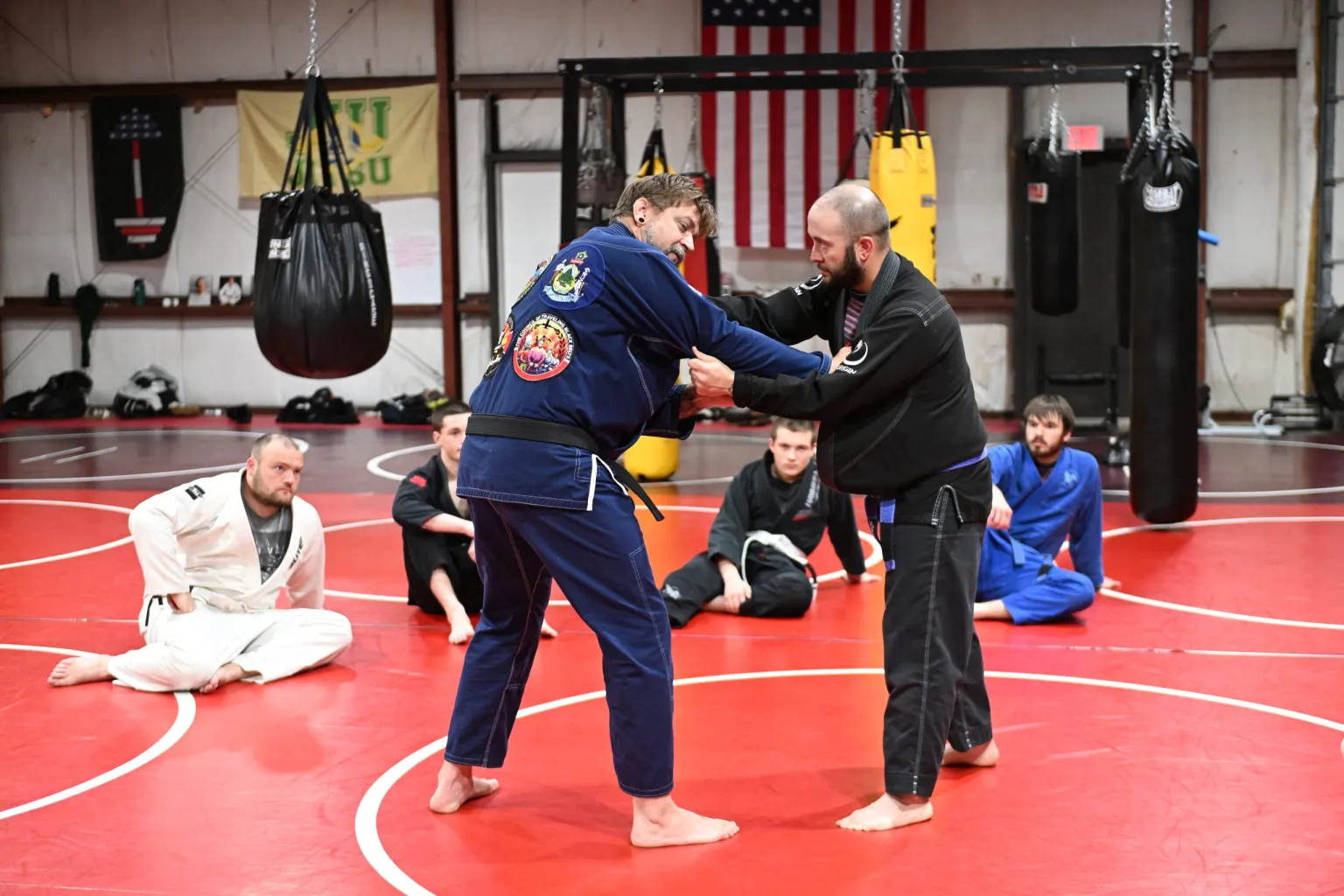
Gi training uses the traditional uniform and emphasizes gripping the fabric for control. It can feel more methodical and technical, and it teaches you how to manage grips and break grips, which is a skill on its own.
No-Gi training usually uses athletic clothing and relies more on underhooks, head position, body control, and wrestling-style movement. It often feels faster, with transitions happening quickly because there are fewer cloth grips to slow things down.
If you are brand new, you do not have to pick the “perfect” option on day one. We help you learn the basics either way, and many adults end up enjoying both for different reasons.
What your first class is like in Orange, MA
Most beginners want to know what will actually happen when they show up. That is fair. Walking into a new training environment can feel like a lot, even when you are excited.
A typical first class experience usually follows a rhythm like this:
1. Arrive a bit early to get oriented, ask questions, and settle in without rushing
2. Warm up with beginner-friendly movement that prepares joints and muscles for grappling
3. Learn a technique or positional concept with clear coaching and demonstration
4. Drill the movement with a partner in a controlled way, focusing on accuracy first
5. Add progressive resistance if appropriate, so you can feel how the technique holds up
6. Optional live rounds may be introduced gradually, depending on comfort and readiness
7. Cool down, quick recap, and time to ask what to work on next
We keep the environment respectful. You will not be “thrown to the wolves.” You will be coached, paired thoughtfully, and encouraged to focus on learning rather than proving something.
Safety, hygiene, and training smart as an adult
Adult Jiu-Jitsu is a contact activity. That means there is always some risk, including strains, sprains, and the occasional sore neck or tender elbow when you are learning. Our job is to help you train in a way that builds skill while reducing unnecessary wear and tear.
A few habits make a big difference:
• Tap early and tap often when a submission is on, because tapping is how we train safely
• Communicate injuries and limitations so we can adjust drills or positions
• Keep nails trimmed, remove jewelry, and wear clean gear each class
• Shower after training and keep uniforms and rashguards clean to reduce skin issues
• Focus on control over intensity, especially in early months when technique is developing
If you are returning to exercise after a long break, that is common. We can scale intensity. If you have a medical concern or prior injury, it is smart to check with a medical professional and let us know what is going on so we can help you train around it.
Who tends to thrive in Adult Jiu-Jitsu
Motivated beginners come in with different goals, but certain mindsets tend to do especially well.
You will probably enjoy Adult Jiu-Jitsu if you want:
• A workout that stays interesting because it is skill-based
• Clear structure and coaching instead of random routines
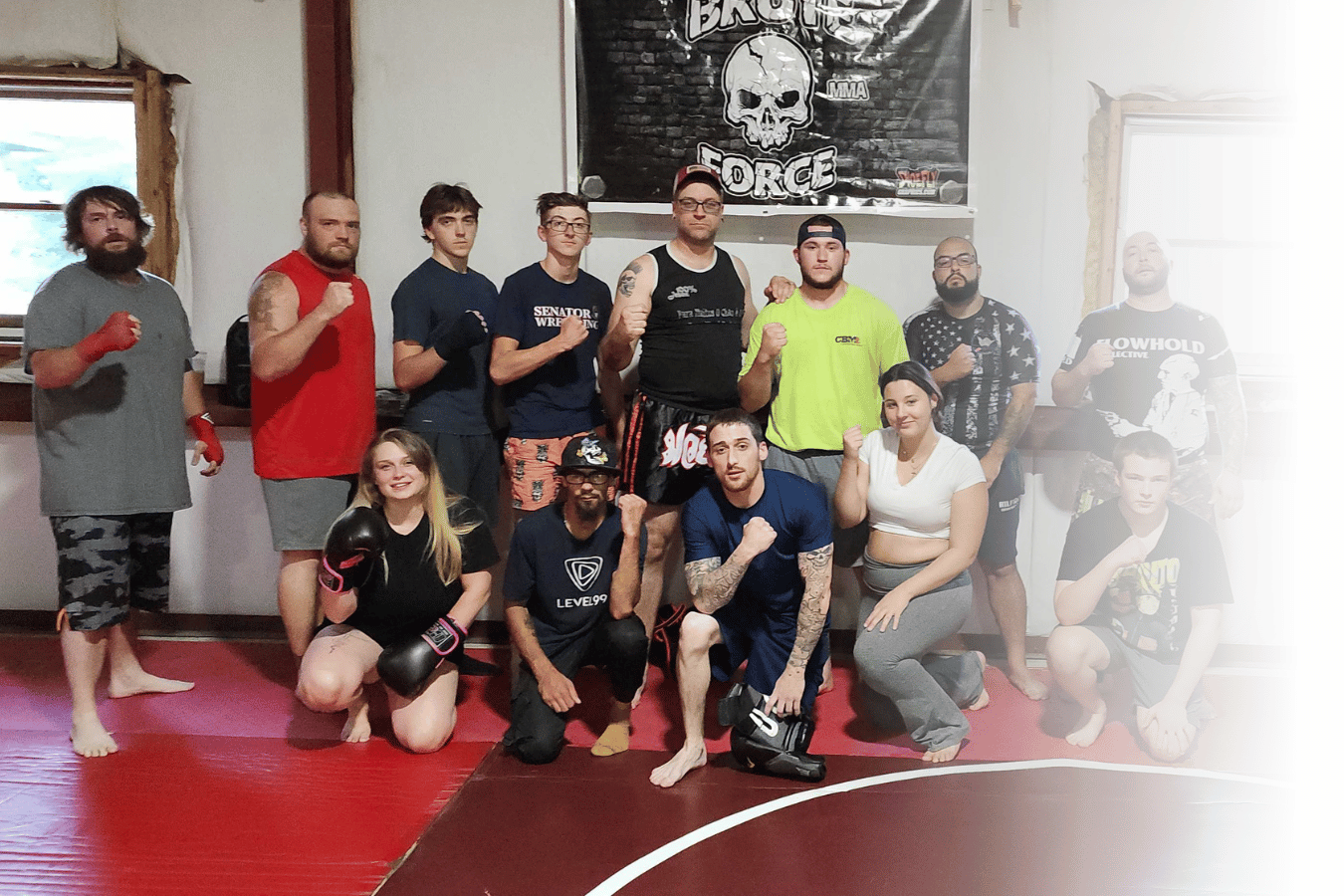
• A supportive community that makes consistency easier
• Practical grappling skills that build real confidence over time
• A hobby that challenges both your body and your brain
You do not need to be young. You do not need to be naturally flexible. You do not need to compete. You just need to show up consistently, stay coachable, and give yourself permission to be new at something.
Common beginner questions we hear (and straight answers)
Do I have to spar right away?
Not necessarily. We introduce live training progressively, and we can guide you based on comfort, safety, and readiness. Drilling and positional training come first for most beginners.
What should I wear?
For No-Gi, athletic clothing without zippers or hard parts is a solid starting point. For Gi classes, you will need a BJJ uniform. If you are unsure, check the website or reach out before your first session so we can give current guidance.
How often should I train as a beginner?
Two classes per week is a realistic starting point for many adults. It is enough to build momentum without beating up your recovery. From there, you can adjust based on goals, schedule, and how your body feels.
Will bigger or stronger partners overwhelm me?
Size matters in grappling, but technique matters a lot too. We pair students with safety in mind, and we emphasize controlled training. The goal is improvement, not domination.
Is Adult Jiu-Jitsu in Massachusetts mostly for competitors?
Competition is an option, not a requirement. Many people train for fitness, confidence, stress relief, and self-defense skills. If you want to compete later, we can support that path, but it is not the only reason to train.
Ready to Begin
Building a consistent practice is easier when training feels meaningful, and Adult Jiu-Jitsu gives you that rare mix of fitness and real skill development. If you are in Orange, MA and want training that challenges you without the “tough-guy” vibe, we have built our adult program around progressive coaching, safe training habits, and a community that welcomes beginners.
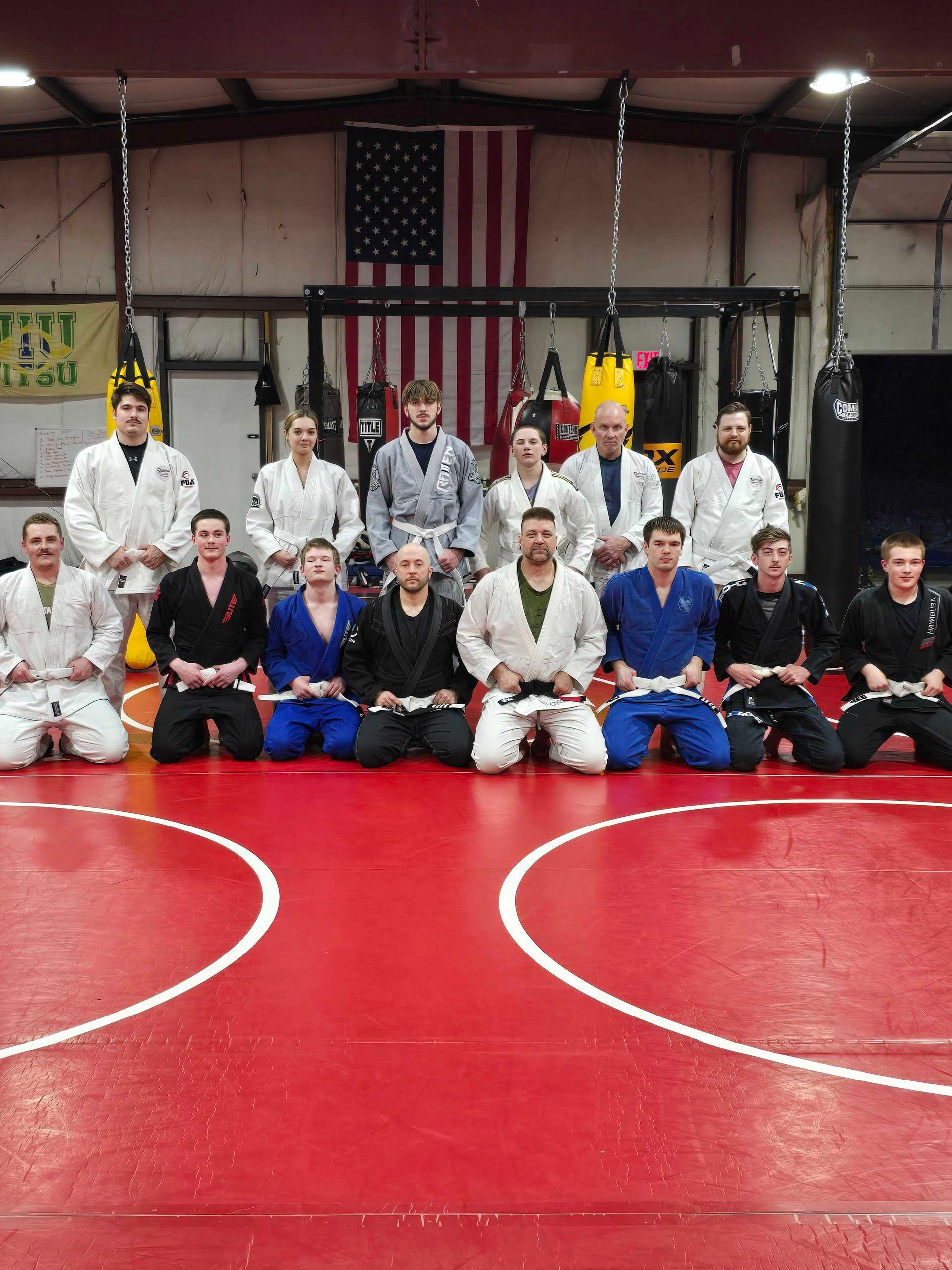
At Roberts Family Mixed Martial Arts, we offer both Gi and No-Gi classes so you can explore what fits your goals and schedule. When you are ready, we will help you take the first step and keep it simple: show up, learn the fundamentals, and stack small wins until they add up.
New to martial arts? Start your training journey at Roberts Family Mixed Martial Arts.
ACCESS OUR SCHEDULE
& EXCLUSIVE WEB SPECIAL
Secure your spot and get started today with our EXCLUSIVE offer!