Jiu jitsu is one of the rare workouts that trains your lungs, your brain, and your timing all at once.
If you have ever tried to “just do more cardio,” you already know the problem: running, biking, and circuits can help your endurance, but they do not always keep you engaged. Jiu jitsu does, because every round asks you to solve a moving puzzle while your heart rate climbs. That mix is a big reason adults around Orange, Massachusetts end up sticking with training longer than they expected.
In our classes, you are not only learning technique. You are building the kind of cardio that shows up in real life: the ability to keep working when you are breathing hard, to recover quickly, and to stay calm while your body is under pressure. The best part is you feel the progress pretty fast, sometimes within a few weeks, especially if you train consistently.
Why jiu jitsu builds real cardio faster than “cardio workouts”
Traditional cardio usually stays in a steady zone. Jiu jitsu does not. A round can swing from slow and controlled to suddenly explosive, then back to steady pressure again. That up and down pattern is closer to interval training, and it pushes your cardiovascular system to adapt.
We see it in beginners all the time. Your first few classes might feel like your lungs are playing catch-up. Then your recovery improves. You notice you can breathe through positions that used to spike your heart rate. You stop “panicking” in a scramble and start thinking again, which is an underrated form of fitness.
The hidden cardio factor: isometric strength under fatigue
In jiu jitsu, you often hold frames, squeeze with your legs, or keep posture while someone tries to fold you. That is a different kind of effort than jogging. Those isometric contractions can raise your heart rate quickly, and they teach you how to manage energy.
We coach you to rely on structure and leverage instead of pure muscle. When you stop trying to bench-press your way out of everything, you last longer, your cardio improves, and your technique starts to click. It is not magic, but it can feel like it.
Sharper reflexes without relying on “fast hands”
People hear “reflexes” and think it is all reaction time. In jiu jitsu, reflexes are more like recognition: seeing patterns early and responding with the right movement before you are late.
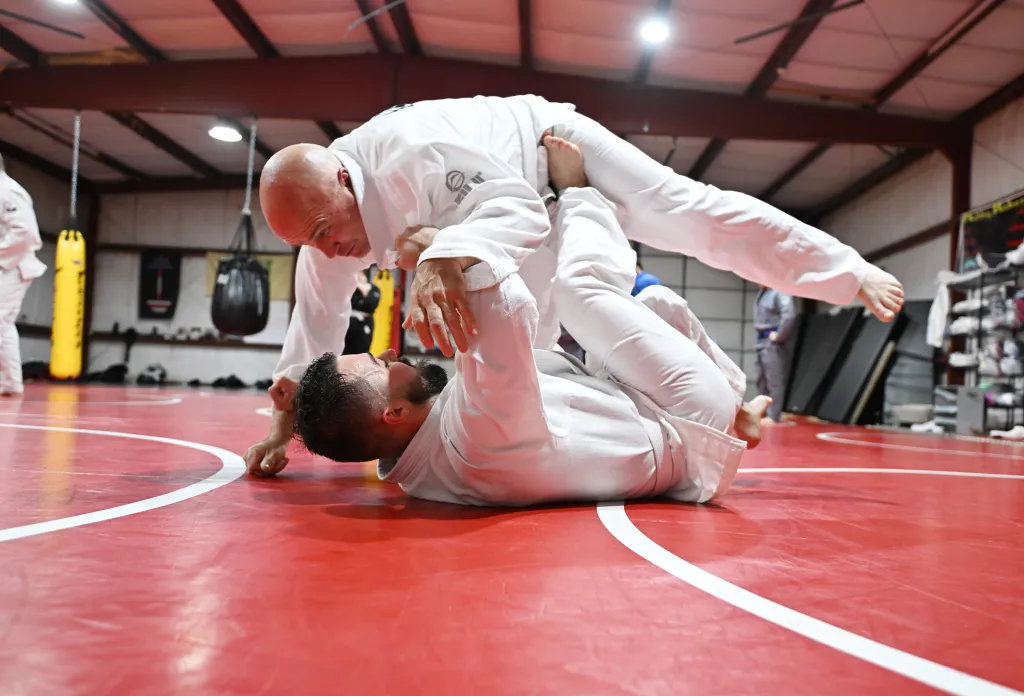
You will practice escapes, guard retention, takedown entries, and positional transitions in a controlled way first. Then you pressure-test them with live training. Over time, your body learns what a grip fight feels like, what a sweep setup looks like, and when a scramble is about to happen. That is when your timing starts to look “fast,” even if you do not feel fast.
Reflex training is really decision training
One of the quickest improvements adults notice is mental speed. You go from “What is happening?” to “I know this position, I know my options.” That is reflex development. It is also why jiu jitsu can be such a stress release. Your attention has to be right here, right now, which makes it tough to ruminate on your day.
What you actually do in an adult class
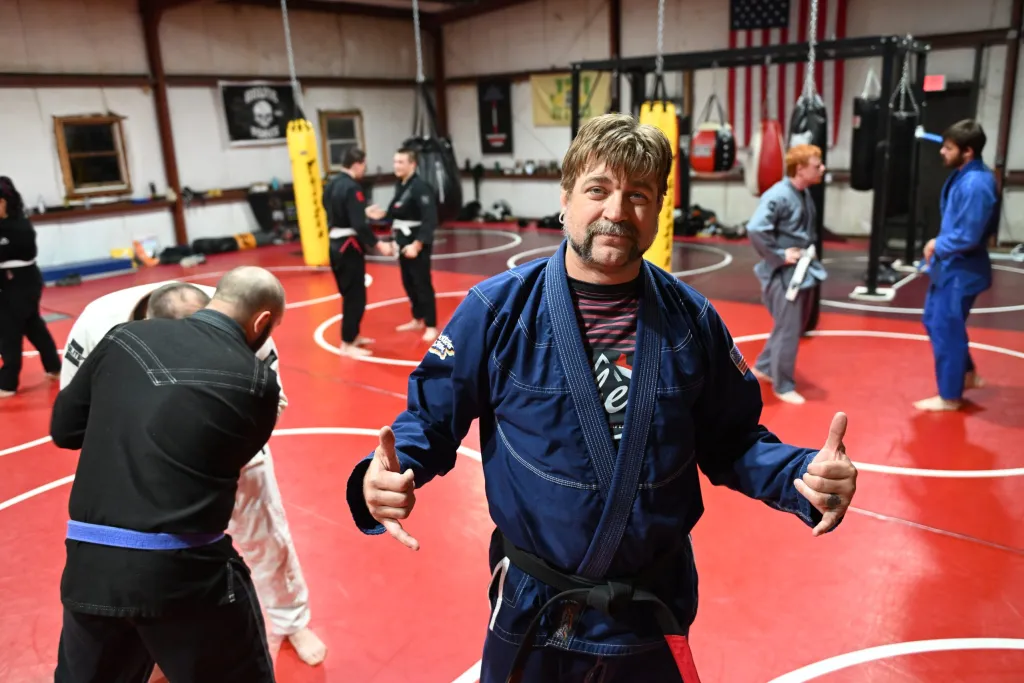
Our adult program is structured to help you learn safely while still getting the workout you came for. We offer Gi and No-Gi training, and we keep the room welcoming for brand-new students while still giving experienced teammates room to grow.
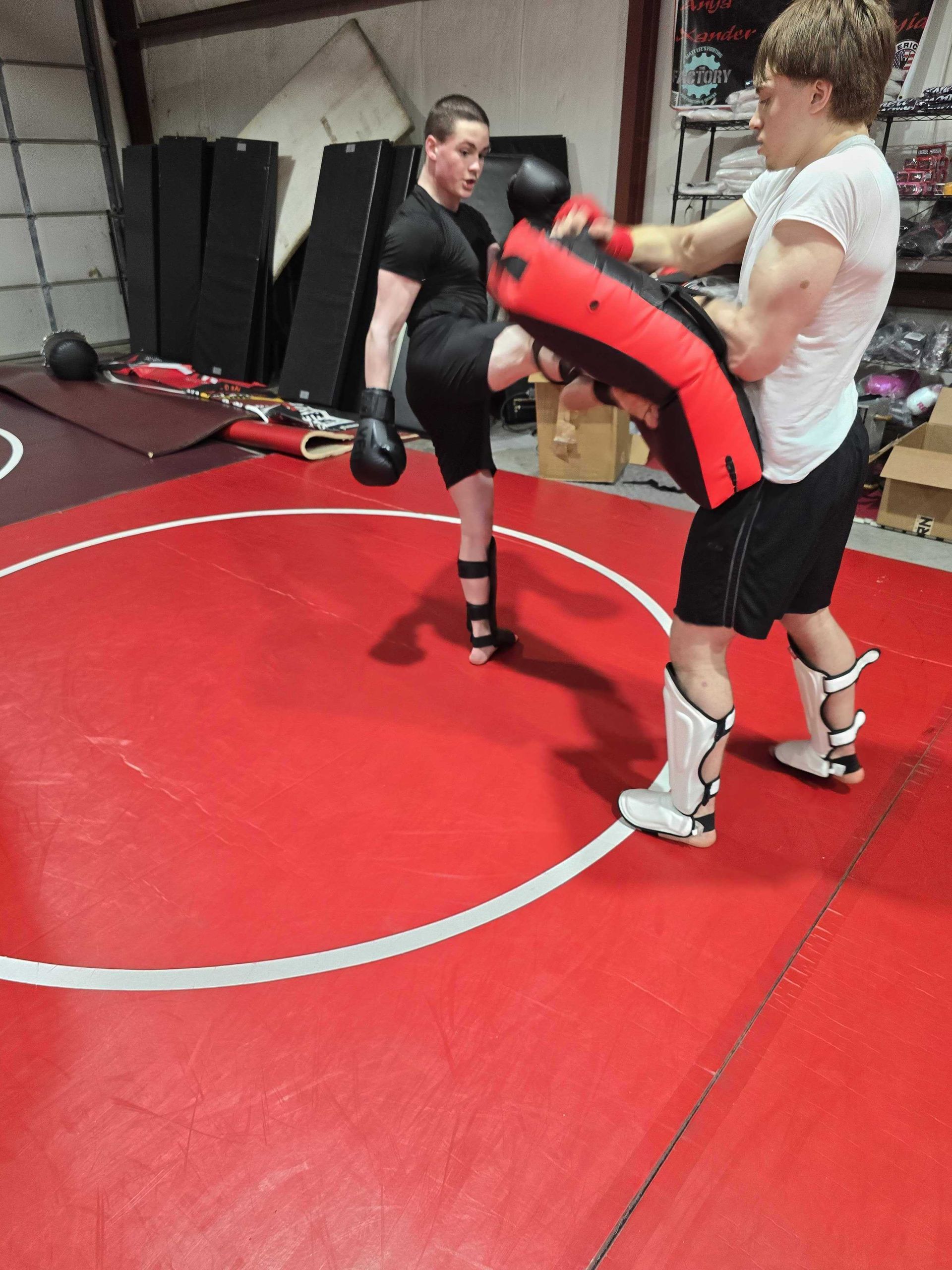
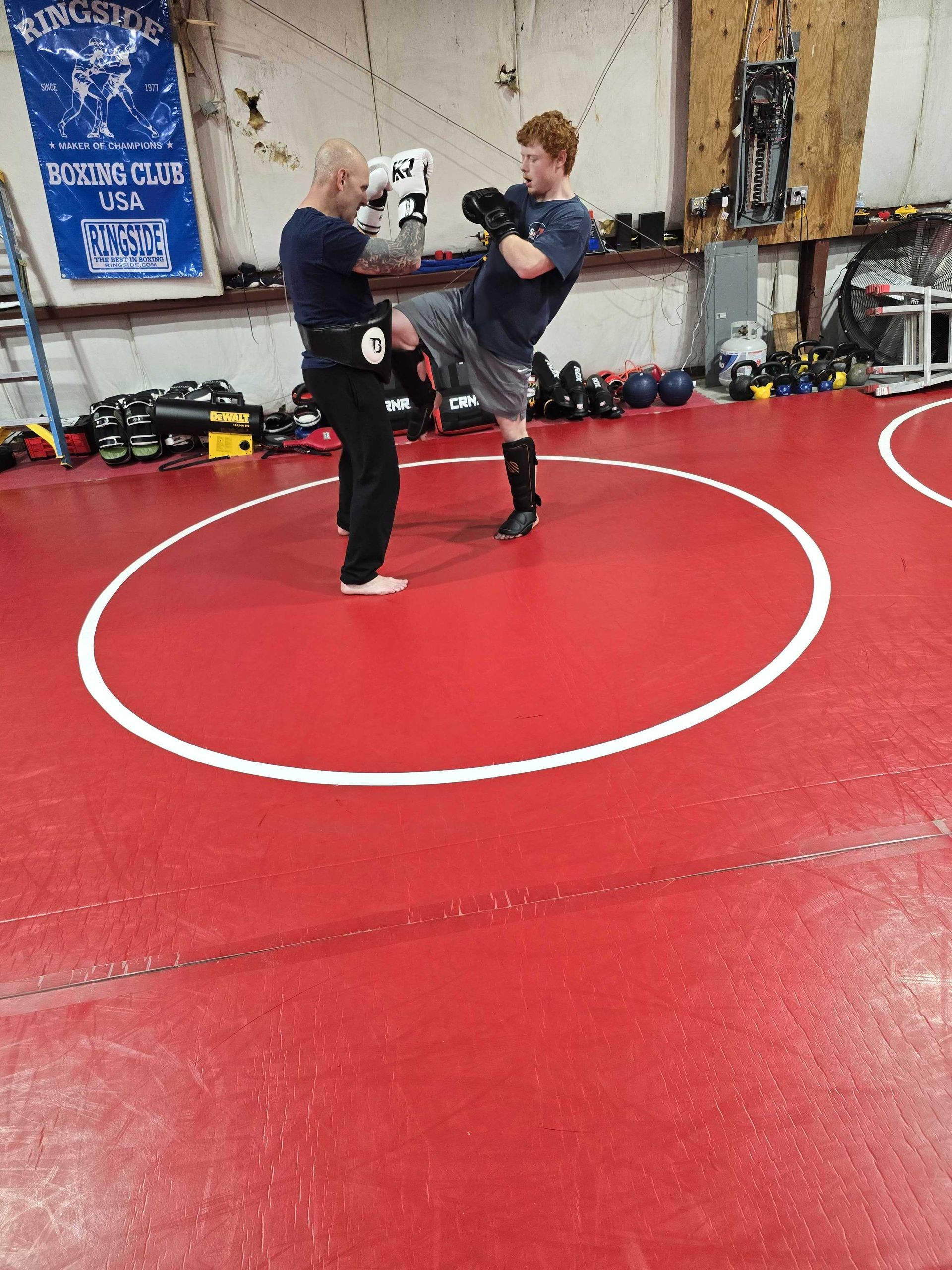
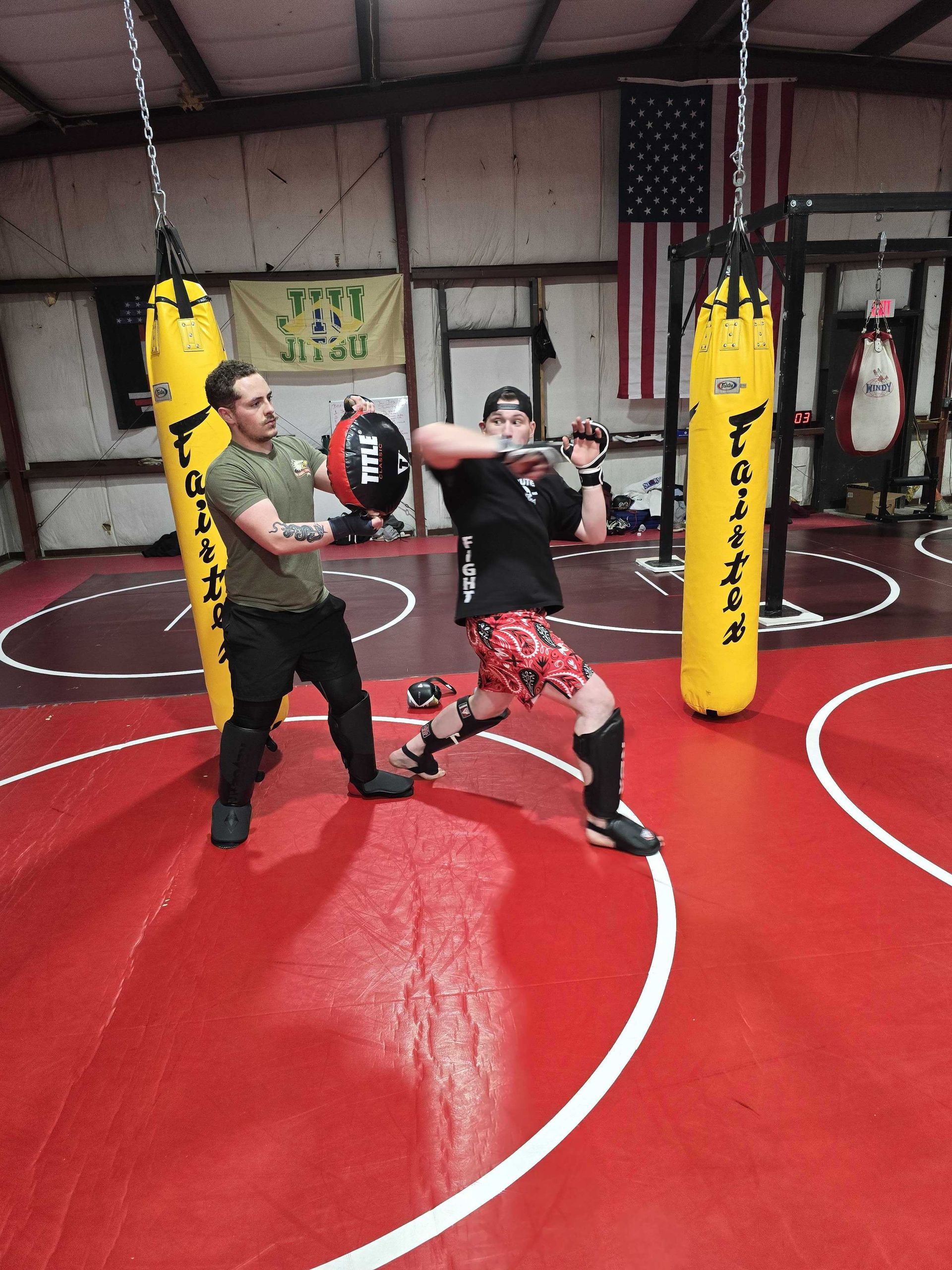
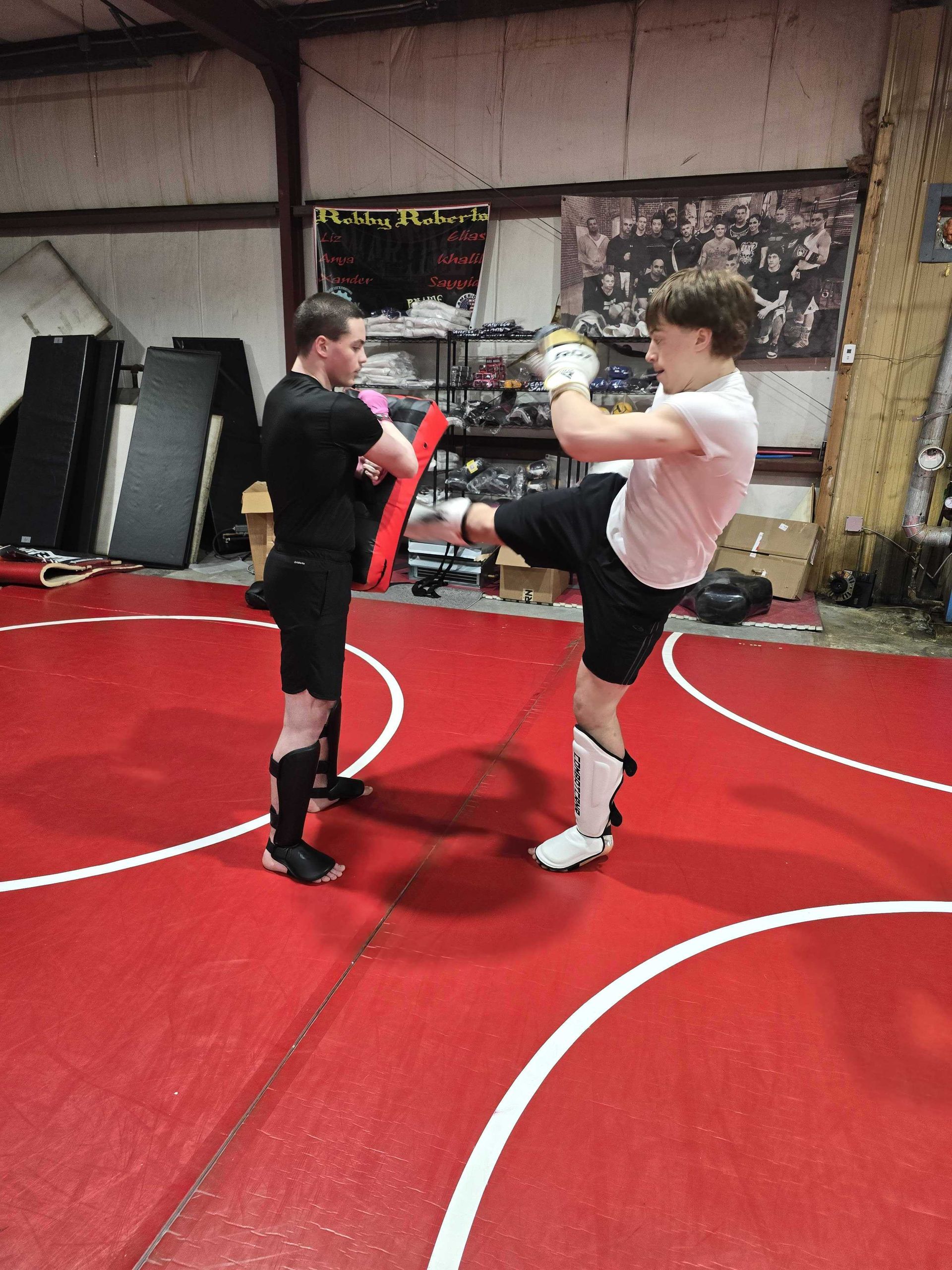
A typical class usually includes technique, drilling, and live rounds. The live rounds are where the cardio and reflex gains show up, but technique is what makes those rounds productive instead of chaotic. We would rather you leave thinking, “I learned something,” than “I survived.”
Here is what most adults can expect from an average session:
- A focused warmup that builds mobility and grappling-specific movement, not just random calisthenics
- Technical instruction with clear details, including where people commonly get stuck
- Drilling time so your body actually remembers the movement patterns
- Situational rounds that start from a specific position to sharpen timing and decision-making
- Live rolling with partners who match your intensity so you can progress without feeling thrown into the deep end
That combination is why adult jiu jitsu Orange MA students often describe the training as both challenging and sustainable. You work hard, but you also learn how to work smart.
Why size matters less than you think
Jiu jitsu has a reputation for letting smaller people handle bigger opponents, and that reputation exists for a reason. Leverage, angle, and control can neutralize strength when the technique is sound. That does not mean size never matters. It means size is not the whole story, and you are not doomed if you are not the strongest person in the room.
We focus on fundamentals that help you create advantage:
- How to frame so you can make space without muscling
- How to use your hips and legs, which are your strongest tools in grappling
- How to control posture and head position to reduce someone’s power
- How to move in layers, so you are not relying on one big effort
When you start applying these ideas, your cardio improves too, because you stop burning energy on low-percentage forcing. Efficient movement is a fitness multiplier.
The science of “gassing out” and how we help you fix it
Most people assume they gas out because they are “out of shape.” Sometimes that is true. More often, it is a mix of breath control, tension, and unfamiliarity. New students hold their breath, squeeze constantly, and try to win every second.
We coach you to relax in the right places. You learn when to grip, when to release, when to use pressure, and when to float. That change alone can make jiu jitsu feel more like a training session and less like a sprint you did not sign up for.
Better breathing is a skill, not a personality trait
We remind students to breathe through transitions, not only when they think they are safe. You will learn to exhale during effort, keep your jaw unclenched, and avoid the “all tension, no movement” trap. Over time, your heart rate still climbs, but your recovery between rounds becomes noticeably faster.
Gi and No-Gi: two flavors, one cardio engine
We teach both Gi and No-Gi. If you are new, it is helpful to know the difference.
Gi training includes grips on the uniform, which slows some exchanges and adds a strong grip and pulling demand. No-Gi is typically faster with more emphasis on body locks, underhooks, and controlling without cloth grips. Both build endurance, but they stress it differently, which is why many people like mixing them.
If your goal is jiu jitsu Massachusetts training that supports overall fitness, cross-training Gi and No-Gi can keep your body adaptable. It also keeps training interesting, which matters more than people admit.
How often should you train to feel cardio and reflex gains
Consistency beats heroic effort. Training once a week is a start, but most adults feel the biggest changes at two to three sessions per week. That is where your body adapts without you feeling like jiu jitsu has taken over your entire life.
Here is a simple progression we often recommend:
1. Weeks 1 to 2: Attend one to two classes per week and focus on learning positions and breathing
2. Weeks 3 to 6: Move to two to three classes per week, add more live rounds, and track recovery
3. Weeks 7 and beyond: Keep a steady schedule, rotate Gi and No-Gi, and set one technical goal per month
That structure keeps you improving without burning out. And if you miss a week, it is fine. You just come back and pick up where you left off.
Safety, tapping, and why beginners can train confidently
The tapping culture in jiu jitsu is one of the reasons adults feel comfortable starting. Tapping is not quitting. It is communication. It lets you train hard while keeping training partners safe.
We build a room where people can learn without ego driving the pace. You will be encouraged to tap early, ask questions, and focus on control. Over time, you become harder to submit not because you refuse to tap, but because your defense improves and you recognize danger earlier.
The best training partner is a controlled one
We match intensity in rounds and help newer students choose partners who will keep things productive. If you are worried about injuries, tell us. We can modify rounds, start you in safer positions, and keep your progress steady.
Jiu jitsu as stress relief that actually feels earned
A lot of fitness routines promise stress relief, but jiu jitsu does something different. It gives your mind a single task: solve the problem in front of you. After class, many adults notice they feel clearer, calmer, and pleasantly tired, like the kind of tired you can sleep on.
You also get small wins that stack up. Escaping a position that used to trap you, lasting one more round, hitting a simple sweep with clean timing. Those wins are not loud, but they are real, and they build confidence in a grounded way.
Ready to Begin
If you want a workout that improves endurance and sharpens reflexes without feeling like you are staring at a clock, we built our jiu jitsu program to deliver exactly that, class after class. At Roberts Family Mixed Martial Arts, we keep training practical, structured, and welcoming, whether you are brand-new or returning after years away.
If you are looking specifically for adult jiu jitsu Orange MA training, we will help you find the right pace, learn solid fundamentals, and build the kind of cardio that carries over into daily life, not just the gym.
See what makes training at Roberts Family Mixed Martial Arts unique by joining a class today.
ACCESS OUR SCHEDULE
& EXCLUSIVE WEB SPECIAL
Secure your spot and get started today with our EXCLUSIVE offer!