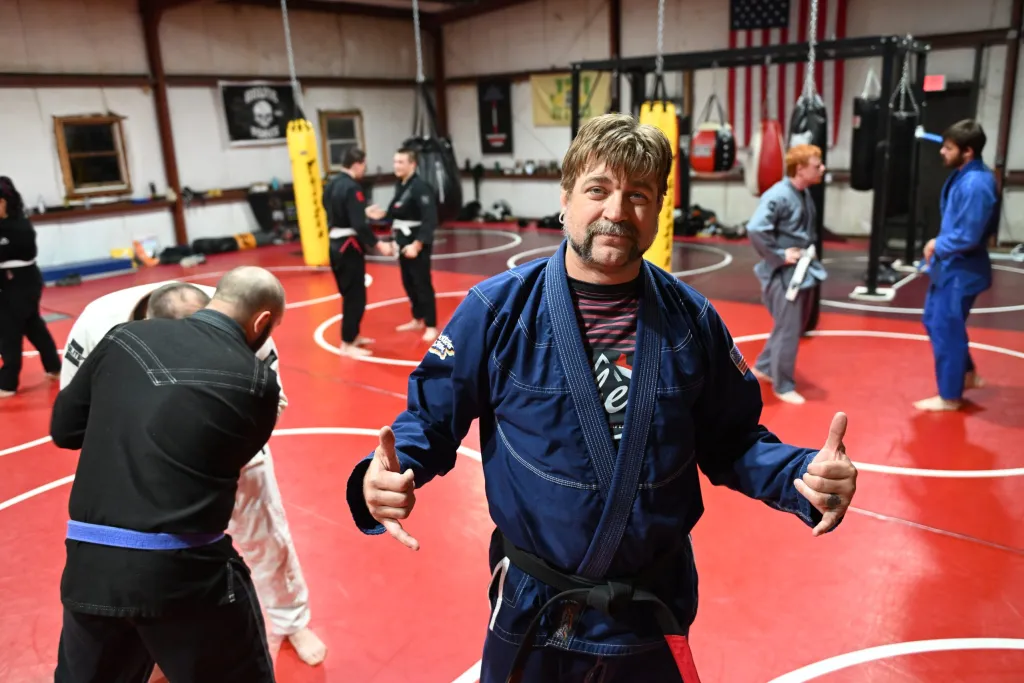
Jiu jitsu is a skill you build with your body, but it changes the way you think everywhere else.
In a small town like Orange, it is easy to feel like your options for structured fitness, stress relief, and character-building activities are limited. We see that reality every week, and it is one reason we lean so heavily on jiu jitsu as a cornerstone of what we teach. It is practical, it is challenging in the right ways, and it rewards consistency more than raw athletic talent.
Jiu jitsu also works for real life. You do not need to be the strongest person in the room to make progress. You need reps, good coaching, and a room where you can train hard without feeling judged. That mix is what helps you unlock inner strength and focus, not as motivational words, but as real skills you can feel in your posture, your breathing, and your decision-making.
Research matches what we experience on the mats. Adult practitioners report major gains like improved confidence at 87.6 percent, reduced anxiety at 87.5 percent, better mood at 96.9 percent, and a full 100 percent reporting a sense of community and respect. Those numbers make sense when you understand what jiu jitsu asks from you: stay calm, solve problems, and keep showing up.
Why jiu jitsu builds a different kind of strength
When people say strength, they often mean muscle. We love strength training, but jiu jitsu develops strength that is more complete. You learn to connect your hips, your posture, and your grips so you can move another person with leverage instead of forcing it. Over time, you start to notice a quieter kind of confidence showing up in daily life, too.
One of the biggest shifts is how you handle pressure. In a live training round, you cannot multitask. Your mind stops wandering because it has to. Your attention narrows to frames, angles, timing, and breathing. That is focus, trained the same way you train a technical skill: with practice.
And because jiu jitsu is a grappling art, it scales. A beginner can work with an experienced partner safely when both people follow the rules of control and respect. That means you can train for years and still feel challenged without needing to chase danger.
The science-backed benefits you feel outside the gym
We like to talk about benefits in plain language because you should know what you are actually getting from your time. Jiu jitsu is a full-body workout, but it is also a mental discipline. The research on Brazilian Jiu-Jitsu shows measurable psychological benefits, and it lines up with what our students tell us.
If you are in a season of life where stress feels constant, the anxiety piece matters. Many people notice a change in a few weeks, especially when training consistently. Part of that is the physical side: movement, conditioning, endorphins. Part of it is the mental reset that happens when you have to be fully present, even for an hour.
There is also evidence that advanced training correlates with higher mental strength, resilience, self-efficacy, and self-control, with fewer mental health disorders reported among experienced practitioners compared to new students. That does not mean you need to chase a belt to feel better, but it does show the direction the practice tends to take you if you stick with it.
Focus is not a personality trait, it is a trained skill
A lot of adults assume focus is something you either have or you do not. We disagree, and jiu jitsu proves it quickly. In class, you work through a sequence, troubleshoot details, and then apply it in a controlled, resisting environment. That cycle trains attention like a muscle.
What focus looks like on the mat
In a typical class, focus shows up in small, repeatable behaviors:
• Listening for one key detail instead of trying to memorize everything at once
• Slowing your breathing when a position feels uncomfortable
• Choosing a simple objective, like recovering guard, and committing to it
• Accepting a reset and trying again without spiraling into frustration
• Noticing patterns, like how opponents react to certain grips
That is not just “mindset talk.” That is skill development. When you practice staying calm and deliberate while tired, you build carryover into work, school, and family life. People often tell us the biggest win is not a submission, it is feeling more steady during the rest of their week.
What beginners in Orange should expect from jiu jitsu
If you are brand new, the first thing we want you to know is this: you do not need to get in shape to start. Starting is how you get in shape. We coach technique first, because technique keeps training safe and helps you progress faster.
In early classes, you will learn how to move on the ground, how to keep good posture, and how to protect yourself in common positions. You will also learn the “culture” of training: how to be a good partner, how to tap early, and how to prioritize control. That culture is a big reason community and respect score so highly in jiu jitsu settings.
The belt system keeps progress clear and motivating
Jiu jitsu uses a progressive belt system that starts at white belt. That matters for beginners because it gives you a roadmap. You focus on fundamentals first, then layer complexity as your timing and awareness improve. The process is honest. You cannot fake it, but you also do not need to rush it.
Consistency tends to beat intensity. Many practitioners train a few times per week, and the data on typical training habits suggests around six hours weekly is common for dedicated students. Your schedule can be different, of course, but the principle remains: steady practice adds up quickly.
Youth martial arts in Orange, MA: discipline without breaking a kid’s spirit
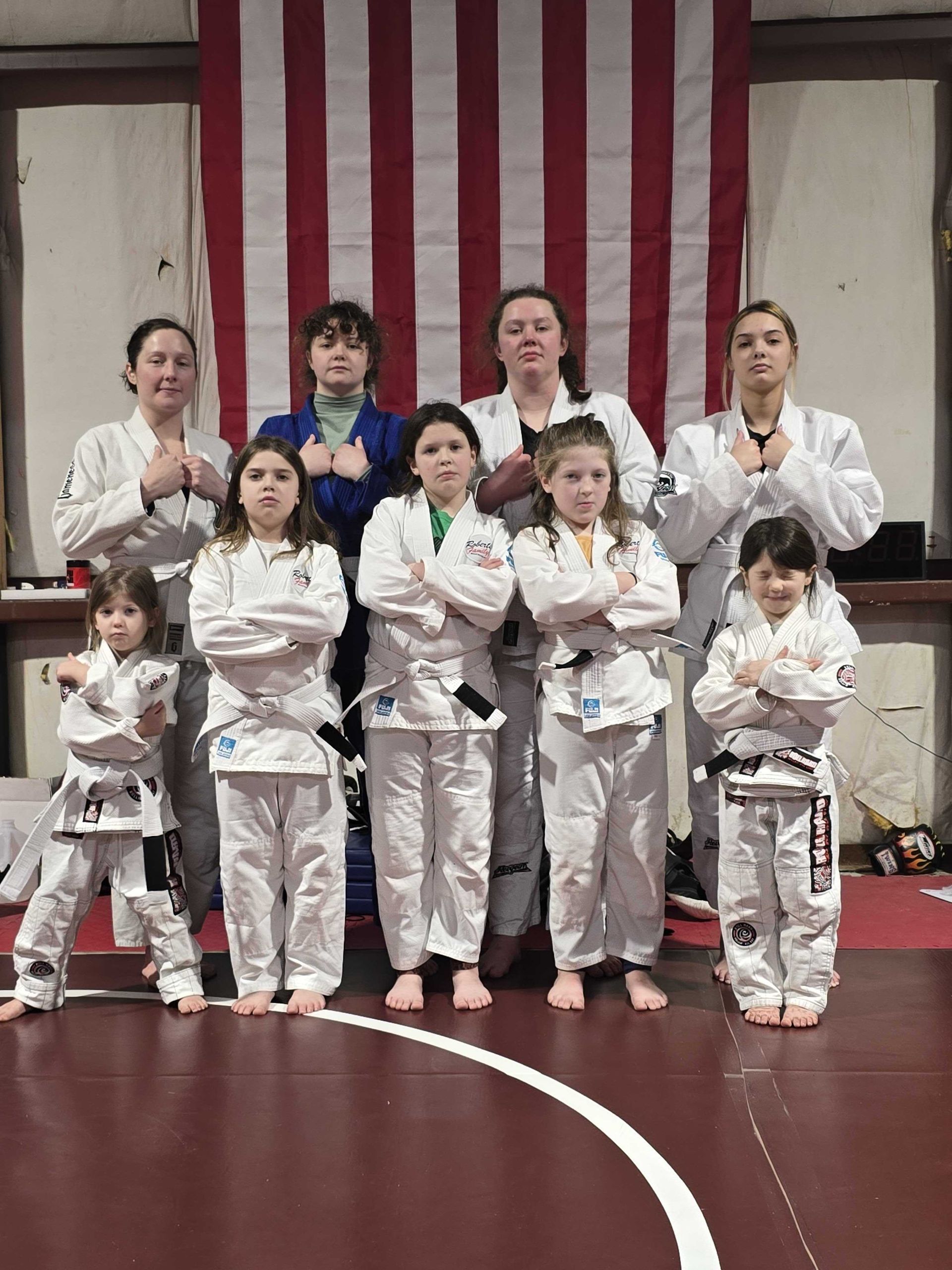
Parents looking for youth martial arts Orange MA programs usually want a few specific outcomes: better listening, healthier confidence, improved behavior at school, and tools for handling bullying. We take those goals seriously, and we aim to build them through structure, encouragement, and clear expectations.
Jiu jitsu is especially effective for kids because it teaches control and problem-solving, not just “win at all costs.” A child learns to recognize positions, escape safely, and stay composed when things feel chaotic. That composure becomes a form of inner strength. It is also where focus gets trained, because kids cannot drift off and still follow the movement.
We also keep youth training age-appropriate. Classes are energetic, but not reckless. Our coaching emphasizes respect, safe partnering, and the idea that you can be both kind and capable at the same time.
Self-defense that makes sense for real bodies and real situations
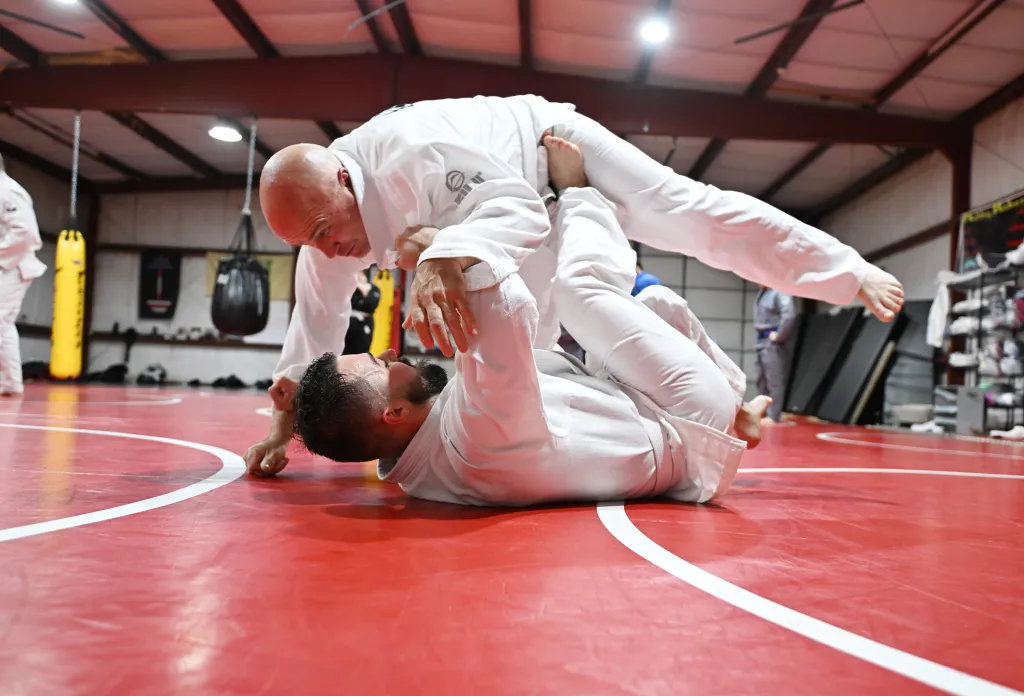
Self-defense is a common reason people try jiu jitsu, and for good reason. Grappling gives you tools for managing distance, controlling posture, and escaping holds. It is not about looking flashy, it is about learning what works when adrenaline is high and space is tight.
Jiu jitsu shines because it is pressure-tested. Techniques are drilled, then applied with progressive resistance. You learn what breaks down, what holds up, and how to adapt. That process builds trust in your skills, and that trust is part of why confidence climbs so consistently among adult practitioners.
Fitness benefits without the boredom factor
If your current fitness routine feels stale, jiu jitsu can feel like a reset. It is conditioning, strength, coordination, and mobility all at once. You are pushing, pulling, bridging, shrimping, standing up, and controlling your base. You get stronger in patterns that translate to everyday movement.
Many people also appreciate that training is not just “work harder.” It is “work smarter.” You can have a tough round and still feel like you learned something, which is different from leaving a workout feeling crushed and confused.
Research also links BJJ training with improvements in cardiovascular health, muscular strength and endurance, flexibility, and coordination. Some people even use it as part of a broader rehabilitation journey, with appropriate coaching and smart pacing.
How we structure classes to build strength and focus over time
A good program needs more than hard training. It needs a progression that helps you improve without burning out. Our classes are designed to give you repetition, feedback, and live practice in a way that feels challenging but manageable.
Here is the general flow you can expect:
1. Warm-up movements that build mobility and body awareness for grappling
2. Technique instruction with clear details, not information overload
3. Partner drilling to build timing, balance, and confidence
4. Positional training where you practice a scenario with constraints
5. Live rounds that match intensity to experience and safety
6. A brief reset so you leave feeling sharpened, not scattered
That structure supports focus. You always have a job to do, and the class gives you multiple chances to do it correctly. Over time, you stop reacting impulsively and start making cleaner decisions, even when you are tired.
Membership, scheduling, and getting started in Orange, MA
People often want practical details early, especially adults juggling work and family. Most martial arts programs in Massachusetts run several classes per week, often evenings and weekends, and typical membership pricing often falls in the 100 to 200 per month range depending on what you include. We keep our options straightforward so you can choose a training rhythm you can actually maintain.
The easiest next step is to check the class schedule page on the website and pick a time that feels realistic. Two to three classes per week is a strong start for most adults. For kids, consistency matters more than volume, so a steady routine usually beats occasional bursts.
We also offer a free trial because jiu jitsu is something you need to feel. Wear comfortable training clothes, show up a little early, and we will guide you through what to do. No pressure to “perform.” Just come ready to learn.
Take the Next Step
If you want a place to train jiu jitsu with purpose in Orange, we have built our classes to develop the traits that matter off the mats: composure, focus, resilience, and real confidence. That is the heart of what we do, whether you are joining for stress relief, fitness, self-defense, or a structured youth program.
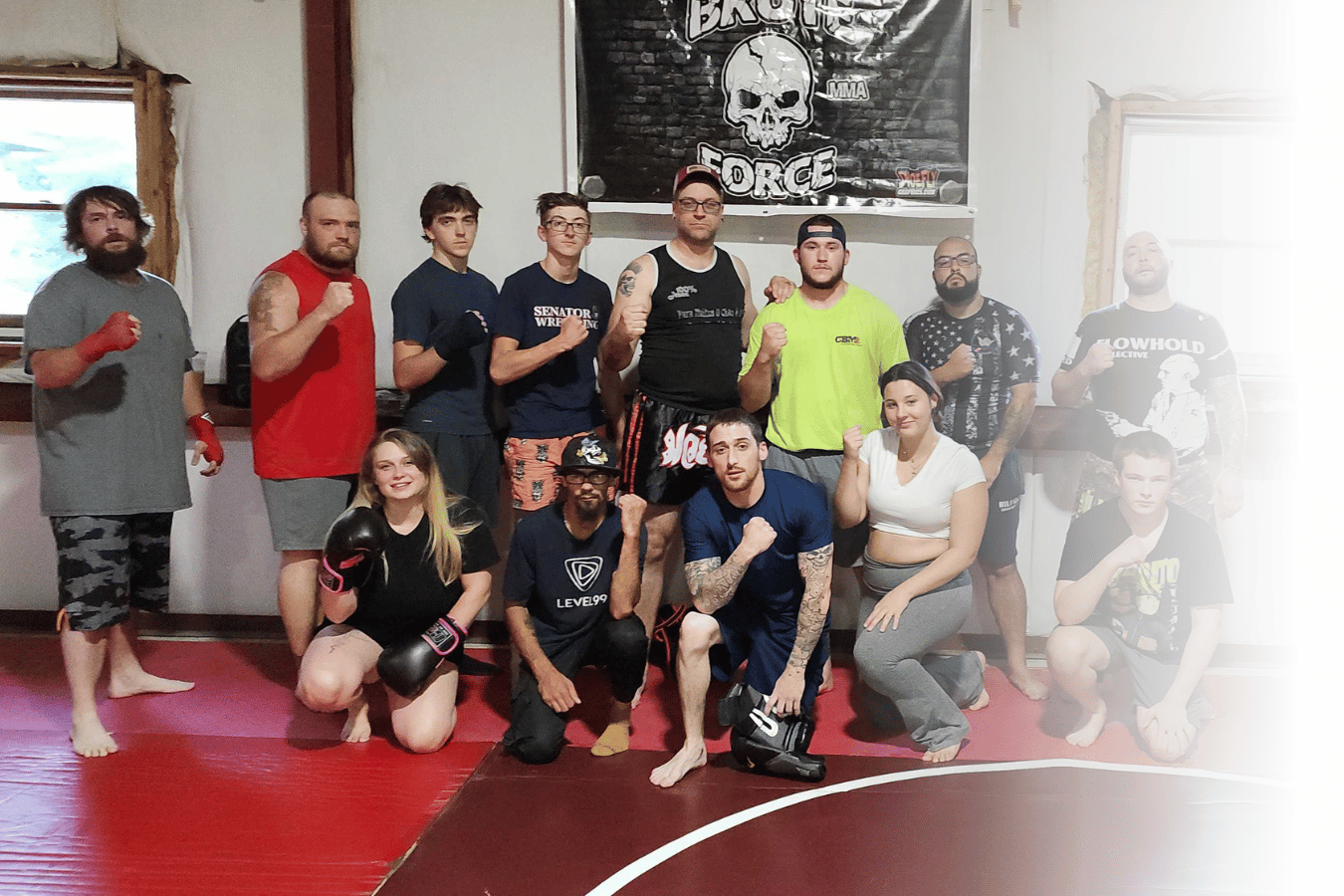
When you are ready, Roberts Family Mixed Martial Arts gives you a clear path from beginner fundamentals to advanced skill, with coaching that respects your starting point and a training culture that values community as much as progress.
Improve your strength, endurance, and self-defense skills by joining a martial arts class at Roberts Family Mixed Martial Arts.
ACCESS OUR SCHEDULE
& EXCLUSIVE WEB SPECIAL
Secure your spot and get started today with our EXCLUSIVE offer!