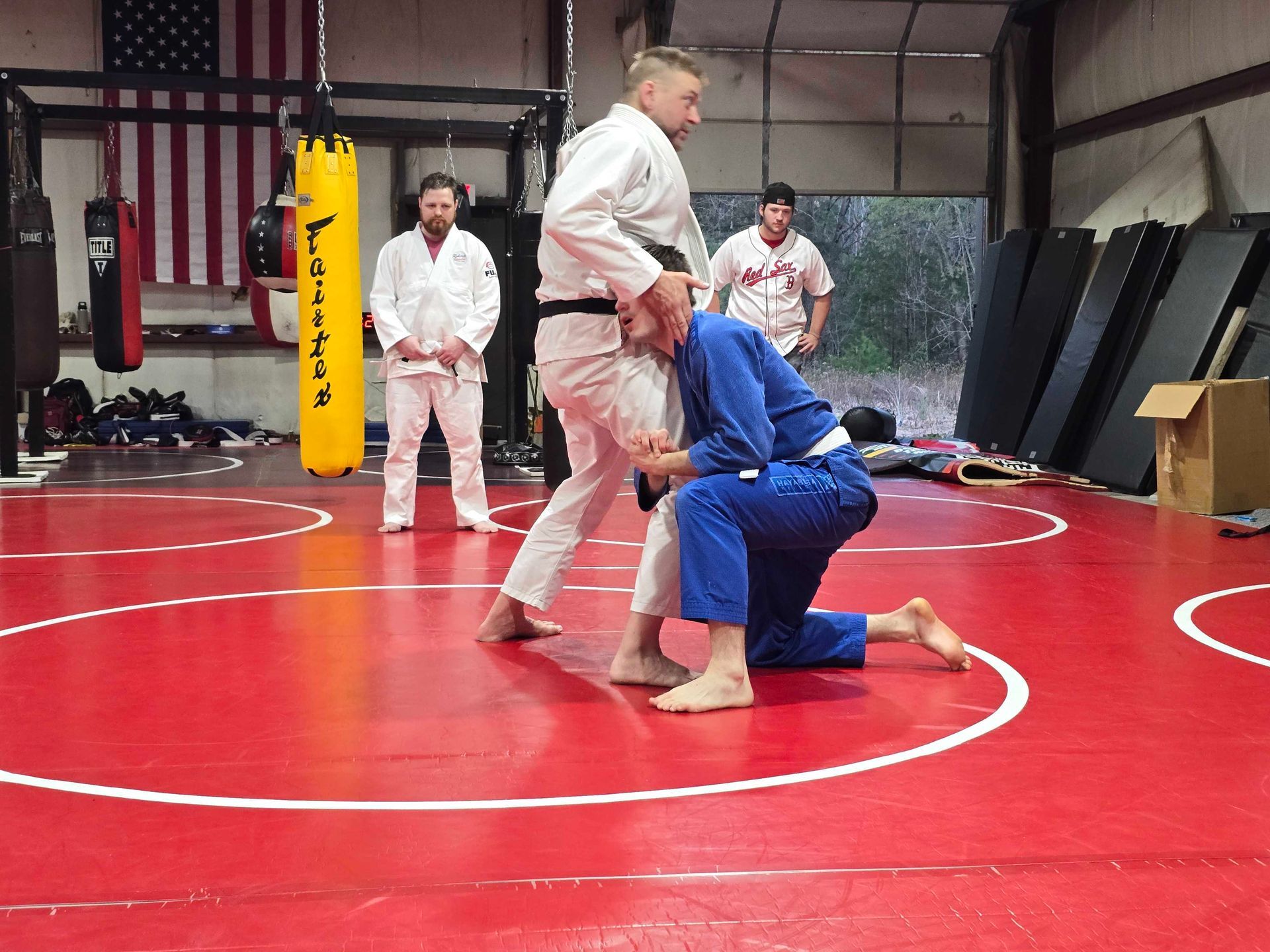
Jiu jitsu is where practical self-defense meets calm focus, turning everyday stress into purposeful movement.
In Orange, MA, a lot of us want training that feels real and useful, not random workouts that leave you sore without a clear “why.” Jiu jitsu fits that need because it rewards attention, timing, and small adjustments more than raw strength. When you train with intention, you start noticing the quiet wins: better posture, steadier breathing, and a mind that doesn’t spiral as easily when life gets busy.
We also see something else that surprises many new students: mindful movement is not slow or soft. It is precise. It is learning to stay present while solving a physical problem in real time. That is a rare skill, and it carries over into work, family life, and how you handle pressure.
If you are searching for adult jiu jitsu Orange MA, you are probably looking for a program that teaches fundamentals clearly, keeps you safe, and helps you progress without ego. That is exactly how we build our classes here in Orange.
Why jiu jitsu feels different from typical fitness
Jiu jitsu is a skill-based practice, which means the “workout” is a side effect of learning something specific. Instead of counting reps, you are learning how to move your hips, frame with your forearms, and control distance with your legs. Over time, the body adapts in a balanced way: grip strength, core stability, mobility, and conditioning all come along for the ride.
What makes it feel different day to day is the feedback loop. When a technique works, you feel it immediately. When it doesn’t, you get information just as quickly. That makes training engaging in a way that treadmills and random circuits rarely match.
There is also a deeper reason so many adults stick with it. The problem-solving element keeps the mind busy in a healthy way. For many people, that is the first hour of the week where notifications fade out and attention narrows to breathing, balance, and simple next steps.
Mindful movement: what it actually means on the mats
Mindful movement is not a buzzword for us. It is a training habit: paying attention to alignment, timing, and energy output so you can do more with less. In a typical class, we will ask you to slow down just enough to feel where your weight is going, then speed up when the moment is right. That blend of patience and action is the heart of jiu jitsu.
Here is what mindful movement often looks like for beginners:
• You learn to relax your shoulders while keeping your frames strong
• You breathe through pressure instead of panicking and holding your breath
• You recognize patterns, like when to shrimp, when to bridge, and when to recover guard
• You stop “trying harder” and start making smarter angles
This is one reason jiu jitsu Massachusetts continues to grow. People are tired of fitness that burns them out. They want training that builds capability and composure at the same time.
The core of Brazilian Jiu-Jitsu: leverage, strategy, and control
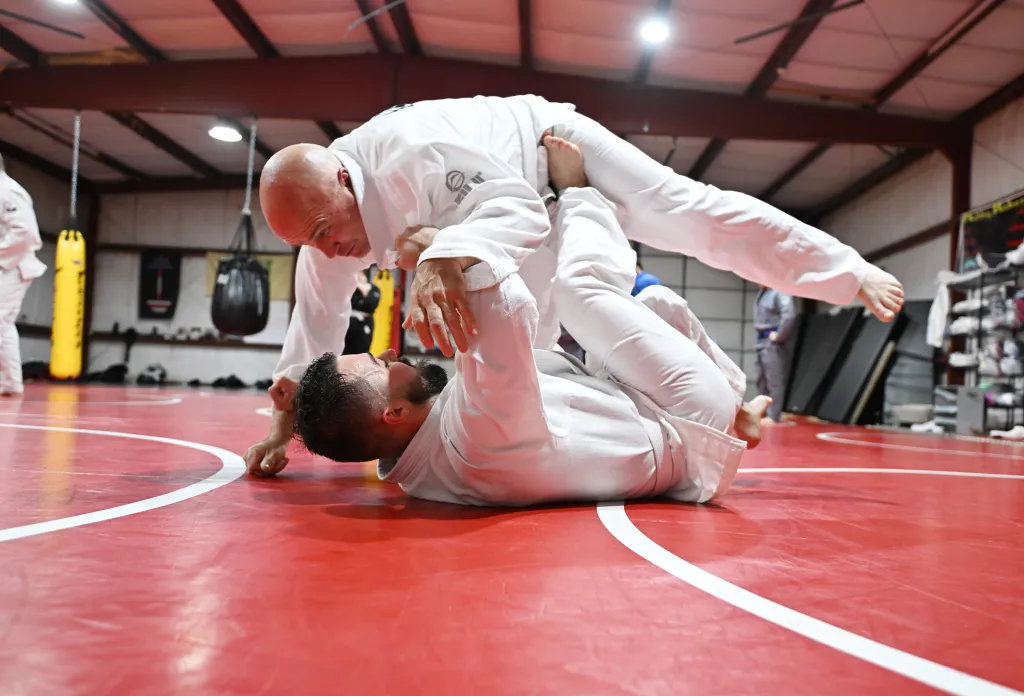
Brazilian Jiu-Jitsu (BJJ) is famous for making technique matter. Through leverage and positioning, smaller practitioners can control larger opponents when the details are right. That is not marketing talk, it is physics and mechanics applied to grappling.
BJJ is also very strategic. You are constantly choosing between options: improve position, threaten a submission, or reset to safety. That “choose the next best move” mindset is powerful because it teaches self-control under stress. Instead of reacting emotionally, you practice responding with structure.
Competition data backs up how technical the art has become. In ADCC 2024, submissions happened at a 34 percent rate, consistent with prior years, and most finishes came from chokes (about 65 percent), with arm attacks around 20 percent and lower-body submissions around 22 percent. Those numbers tell a simple story: control and clean mechanics win, especially when pressure rises.
What you will learn in our adult program
Adults come in with different goals: practical self-defense, fitness, stress relief, confidence, or a new challenge that actually sticks. We keep the pathway clear, so you are not guessing what to do next.
In our adult program, you can expect to develop:
• Positional fundamentals like guard, side control, mount, and back control
• Escapes and defensive layers so you feel safer as intensity increases
• Submissions taught with control, including high-percentage chokes and joint locks
• Takedown and clinch basics, because bringing the fight to the ground matters
• Live training that is structured, not chaotic, so you can apply skills gradually
We also coach you to understand why something works, not just copy steps. When you understand the “why,” you keep progressing even if you miss a week or come back after a long day at work.
Safety first: how we reduce risk without watering things down
A common question we hear is, “Is jiu jitsu safe for adults?” It is a contact sport, so risk exists, and we take that seriously. Safety is not a single rule, it is a culture: how partners treat each other, how techniques are taught, and how training intensity is managed.
We keep training safe by focusing on structure:
1. Clear tapping expectations and reminders that tapping early is smart training
2. Technique-first rounds where you practice without ego or speed
3. Progressive sparring, so beginners are not thrown into the deep end
4. Coaching on body mechanics to protect knees, neck, and shoulders
5. Clean mats and practical hygiene habits for a healthy environment
You will still work hard, but you will not be pressured to “win” practice. Our job is to help you train for months and years, not just survive a week.
The mental benefits: resilience, self-control, and a calmer baseline
The physical benefits of jiu jitsu are obvious once you train for a few weeks. The mental benefits tend to sneak up on you. You start handling discomfort better. You stop catastrophizing when you are tired. You learn to breathe and keep thinking.
Research in combat sports and grappling points to improvements in resilience, self-control, and mental strength. In one study set involving hundreds of athletes, consistent training (for example, 2 to 3 sessions per week across several months) was linked with reduced PTSD symptoms and improved psychological wellbeing. We cannot promise specific clinical outcomes, of course, but we can say this: many students describe training as a reset button. Not because life becomes easy, but because your response becomes steadier.
Mindful movement is a skill. The more you practice it under pressure, the more available it becomes everywhere else.
Gi and no-gi: two training styles, one goal
If you are new, you might wonder about the uniform and whether you need to choose a “side.” We treat gi and no-gi as complementary. The gi slows things down and helps you learn grips, posture, and patience. No-gi adds more scrambling and demands strong control without relying on cloth.
Both styles teach you the same essentials: posture, base, frames, and positional control. And both keep you honest. If something works only because your partner lets it, you will find out quickly.
Modern trends in grappling also show more blending with wrestling and judo concepts, especially in takedowns and transitions. Even at the highest levels, wrestling-based takedowns have been a dominant factor in scoring and successful actions, which is why we do not ignore the stand-up phase.
Competition preparation without losing the “everyday” value
Not everyone wants to compete, and that is completely fine. But competition training has benefits even if you never step on a mat under bright lights. It sharpens conditioning, improves your decision-making speed, and gives your training structure.
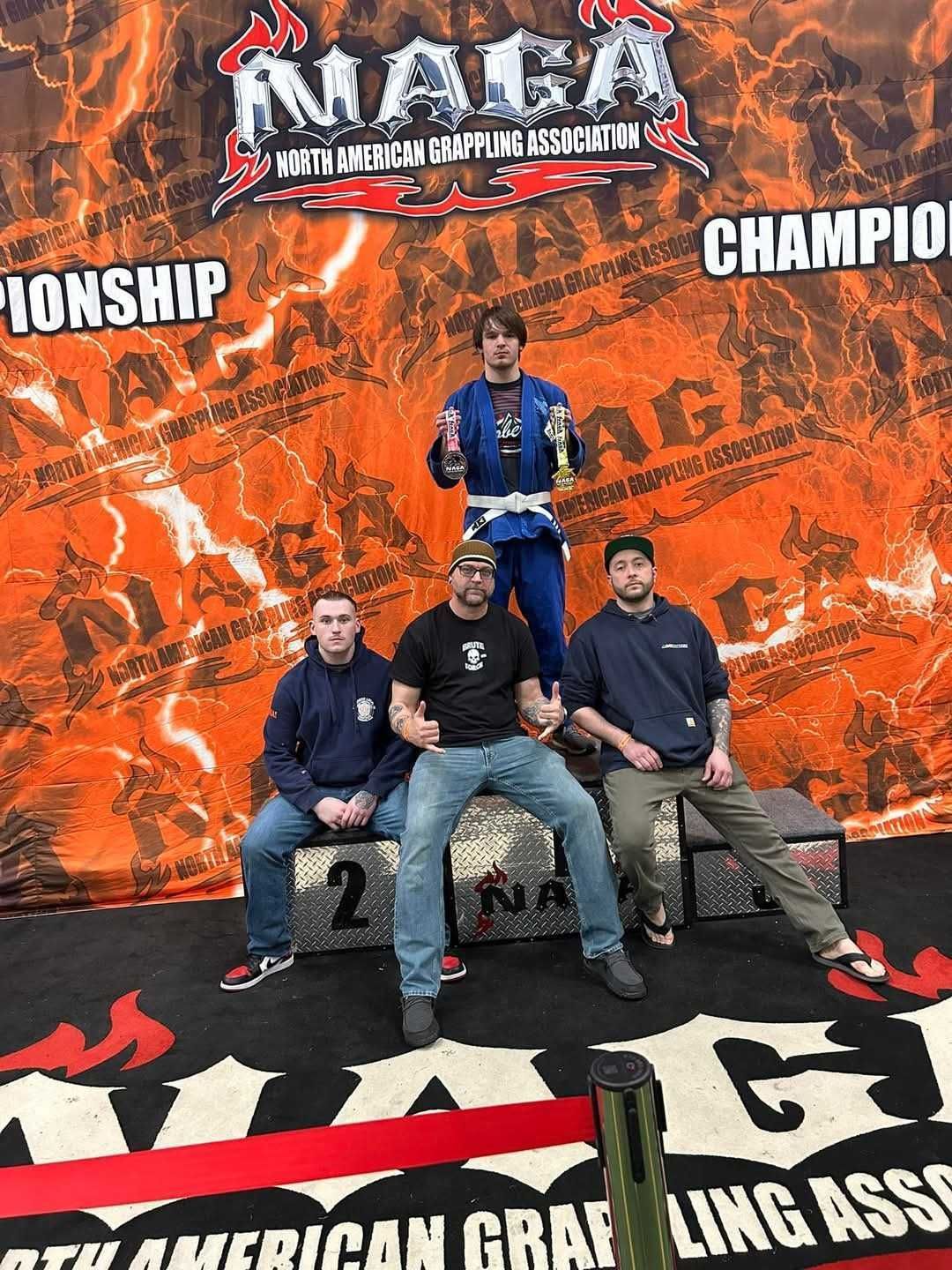
Massachusetts has an active competition scene, and local teams continue to earn medals year after year, showing the region’s depth and talent. If you want to compete, we will help you build a plan: weight management that is sane, skill targets that are measurable, and pacing strategies that keep you effective late in a match.
We also keep perspective. A medal is nice, but the bigger win is being capable: protecting yourself, moving well, and feeling confident in your body.
Getting started in Orange: what to expect in your first few weeks
Starting adult jiu jitsu Orange MA should feel straightforward. You do not need a background in athletics, and you do not need to be “in shape” first. Training is how you build the shape, the coordination, and the confidence.
Most beginners notice progress in stages. Week one is learning how to move on the ground without burning all your energy. Weeks two and three are where positions start to make sense. By week four, you usually have a couple of escapes and a guard concept that you can rely on when things get messy.
A simple starting routine works well for many adults:
• Train 2 to 3 times per week for steady skill development
• Focus on survival and escapes before chasing submissions
• Keep notes on 1 or 2 concepts per class so you remember the details
• Prioritize sleep and hydration, because recovery matters more than people admit
• Ask questions, because confusion is normal and fixable
Gear is also simpler than it seems. Many students start with basic training clothes for no-gi and add a gi when ready. You do not need to overbuy equipment to begin.
Community, consistency, and why people stay
The best jiu jitsu program is the one you can do consistently. Consistency comes from a schedule that fits your life, coaching that makes sense, and training partners who respect the room. We put real effort into building a culture where you can train hard without feeling like you have to prove something every night.
Over time, you will notice subtle changes: you stand a little taller, you handle close contact with more calm, and you stop rushing decisions. That is mindful movement taking root. It is not flashy, but it is powerful.
And because jiu jitsu is endlessly deep, you never run out of things to learn. That is part of the appeal in jiu jitsu Massachusetts and beyond. The global growth is not an accident. People want skills that last.
Take the Next Step
If you want jiu jitsu in Orange with a clear path from beginner fundamentals to confident, capable training, we are ready to help you start. Our approach is built around mindful movement, real-world effectiveness, and a training environment where adults can improve without feeling beaten up.
You can explore adult classes, training options, and next steps with us at Roberts Family Mixed Martial Arts, and we will help you match the program to your goals, whether you are here for self-defense, fitness, stress relief, or competition.
Take your first step onto the mats and learn the fundamentals at Roberts Family Mixed Martial Arts.
ACCESS OUR SCHEDULE
& EXCLUSIVE WEB SPECIAL
Secure your spot and get started today with our EXCLUSIVE offer!