Jiu jitsu gives your stress a place to go, and a way to come back calmer, stronger, and more focused.
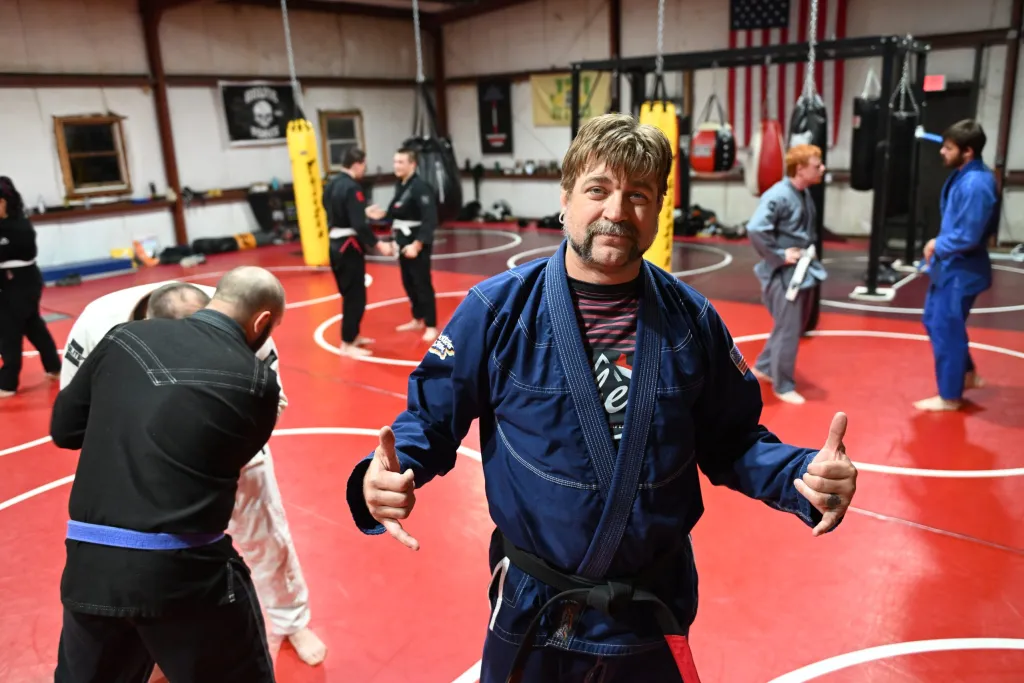
In Orange, life can feel like it moves in two speeds: quiet stretches where you’re juggling responsibilities, and sudden bursts where everything piles up at once. That’s one reason Jiu jitsu fits so well here. It’s not just a workout, and it’s not only self-defense. It’s a structured hour where you can set the day down, learn something real, and leave with your mind less noisy.
We teach jiu jitsu with adults in mind, including beginners who have never trained before. You don’t need a background in sports, you don’t need to be “in shape,” and you definitely don’t need to be aggressive. You just need a willingness to learn, and the patience to let small improvements stack up over time.
Interest in Brazilian Jiu-Jitsu has surged across the country, with millions of practitioners worldwide and hundreds of thousands in the United States alone. That growth isn’t just a trend, it’s a signal: people are looking for training that builds practical skill, physical resilience, and stress relief all at once. Our adult program brings that experience to Orange, MA, in a way that feels doable and sustainable.
Why jiu jitsu works so well for stress relief
Stress is often “stored” in the body as tension: tight shoulders, shallow breathing, restless sleep, that wired feeling that never quite turns off. Jiu jitsu is one of the rare activities that forces a clean mental reset because your attention has to be present. When you’re learning posture, base, grips, and escapes, you can’t simultaneously spiral about emails, bills, or what you should have said in a meeting.
There’s also something grounding about the training environment itself. The mat is honest. If a technique works, you feel it. If it doesn’t, you adjust. That feedback loop is immediate, and it trains your nervous system to handle pressure with problem-solving instead of panic.
And no, stress relief doesn’t require going to war every class. We structure training so you learn in layers: technique first, then controlled practice, then optional higher-intensity rounds when you’re ready.
What “strength” means on the mat (and off it)
In jiu jitsu, strength is not just muscle. It’s alignment, timing, and the ability to stay calm long enough to make a good choice. Of course you’ll get stronger physically, but the more interesting change for most adults is how their posture, breathing, and confidence shift over weeks of training.
On the mat, you learn to:
• Keep a stable base when someone tries to move you
• Escape bad positions without burning all your energy
• Use leverage so technique carries the load, not brute force
• Recover quickly after a mistake instead of mentally checking out
Off the mat, those habits translate in a pretty practical way. People often notice they’re less reactive, more patient, and better at staying steady when life pushes back.
Adult jiu jitsu in Orange, MA: what your first month should feel like
When you’re starting adult jiu jitsu Orange MA, it helps to know what “normal” feels like. The first few classes can be a lot, not because it’s impossible, but because everything is new: the pace, the vocabulary, the physical closeness of grappling, even learning how to move on the ground efficiently.
Our goal in the first month is simple: make you comfortable enough to keep showing up.
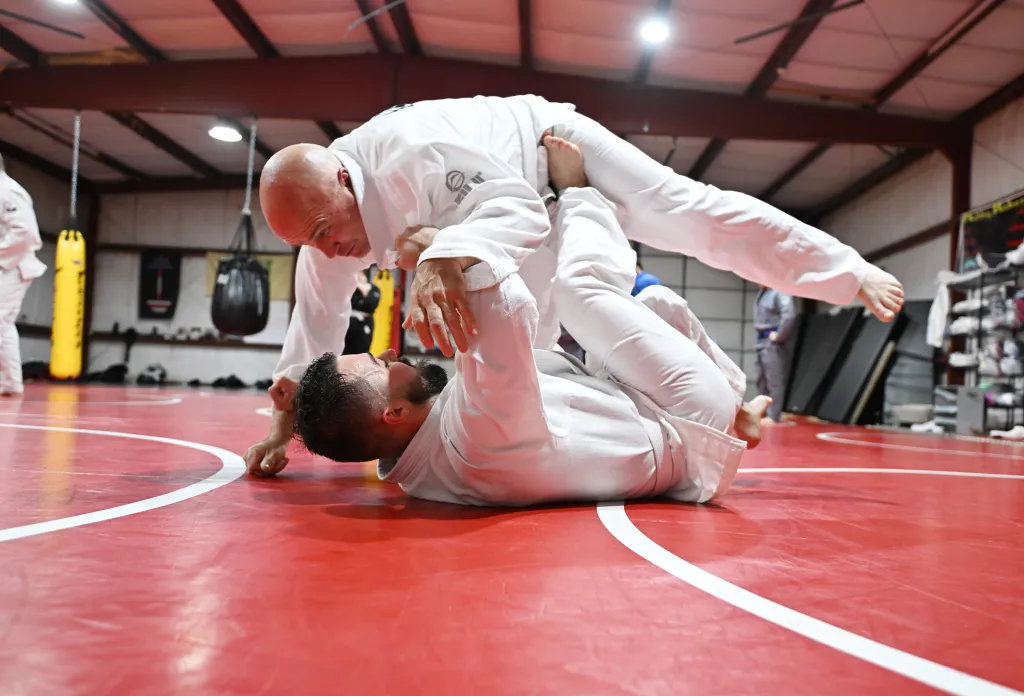
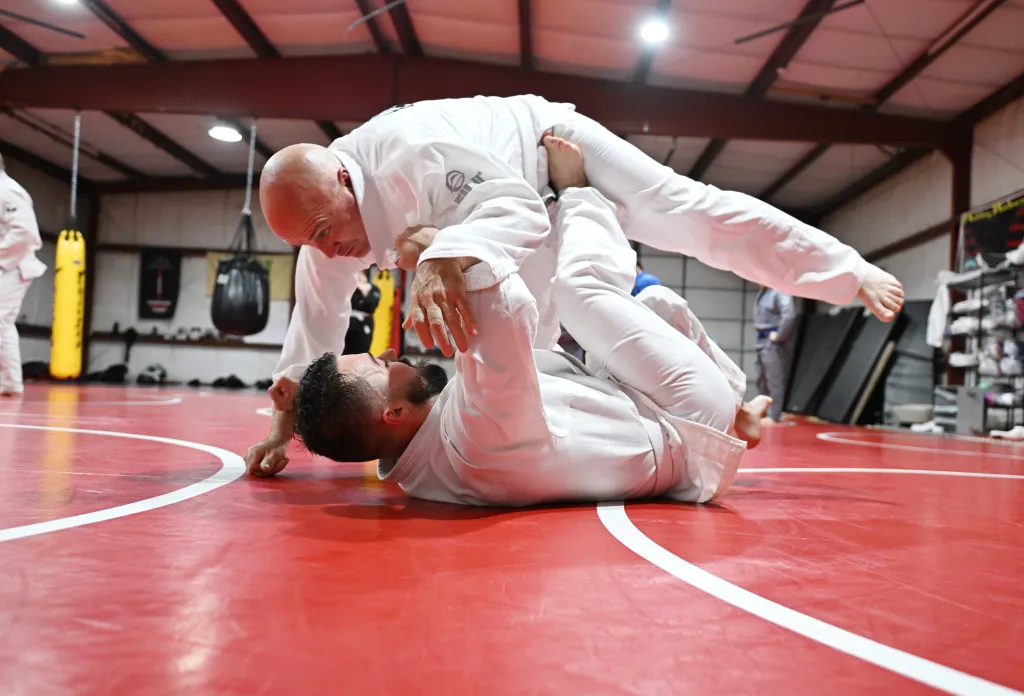
You’ll learn foundational positions and concepts like guard, side control, mount, and back control, but we don’t dump everything on you at once. We focus on high-value skills that reduce panic and increase control, especially:
• How to frame and create space when someone is close
• How to stand up safely from the ground
• How to tap early and understand tapping as communication, not defeat
• How to pace yourself so you don’t gas out in five minutes
By the end of your first month, you should feel more coordinated, more aware of your body, and more confident walking into class. You won’t “know everything,” but you’ll know enough to enjoy training without feeling lost.
The modern jiu jitsu landscape, and what we emphasize for real-world progress
Jiu jitsu is evolving fast. No-gi competition has pushed wrestling-style takedowns and fast transitions into the spotlight, and high-level events show a steady rate of submissions, with chokes leading the way. That matters for you even if you never compete, because it highlights something important: efficient control and clean finishing mechanics beat frantic strength.
In our program, we keep training practical. That means we emphasize:
Strong positional control before fancy submissions
Submissions are exciting, but position is what keeps you safe and lets you choose what happens next. We teach you to stabilize first, then attack.
High-percentage finishes and reliable escapes
Chokes and fundamental joint locks show up again and again because they work when your mechanics are right. We focus on details you can repeat under pressure, not just techniques that look good in a demo.
Stand-up awareness that matches today’s grappling
Wrestling influence is real. Even for hobbyists, learning basic takedown defense, clinch balance, and safe ways to go to the ground reduces injury risk and boosts confidence.
A steady pace that supports long-term training
Adults have jobs, families, and old injuries that sometimes complain. We build consistency by coaching smarter movement and sustainable intensity.
Safety, injuries, and how we coach smarter training
Let’s be direct: injury risk in jiu jitsu is real. Research summaries commonly cite that a significant portion of athletes report injuries within a six-month window. That statistic can sound alarming until you add the missing context: many injuries come from training too hard too soon, ignoring fatigue, or sparring without clear boundaries.
We take safety seriously because training is only useful if you can keep training. Our coaching priorities include progressive resistance, clear partner expectations, and technique selection that supports healthy development.
Here are our core safety habits we coach from day one:
1. Tap early, tap clearly, and release immediately when your partner taps
2. Match intensity to experience level, especially in the first few months
3. Prioritize neck and shoulder safety with smart positioning and controlled finishes
4. Choose control over speed when learning something new
5. Train 2 to 3 times per week for steady adaptation instead of cramming and burning out
If you’re dealing with stress, sleep issues, or a demanding schedule, that approach matters. You’re not here to “survive” class. You’re here to build capacity, and that takes smart pacing.
What you’ll learn in our adult program (without getting overwhelmed)
Adult students usually want a mix of fitness, self-defense confidence, and a skill they can keep improving for years. We design our classes to hit all three without making training feel complicated.
You can expect a blend of:
• Fundamental movement: hip escapes, bridging, technical stand-ups, base and balance
• Positional training: how to stay safe in bad spots and control in good spots
• Submissions with purpose: chokes and joint locks taught with safety-first mechanics
• Live rounds: optional and scaled, so you build composure under real resistance
• Conditioning that comes from grappling itself: strength and cardio built inside the skill
Because jiu jitsu is so technical, you’ll also get something many workouts don’t provide: a clear sense of progress. When an escape works for the first time, or you hold position against someone stronger, it’s hard not to walk out a little taller.
Costs, gear, and what to bring to your first class
Most adults want the practical details upfront. Across the U.S., monthly dues often land in a range that’s roughly in the $130 to $150 neighborhood in many regions, and Massachusetts tends to be in that general zone. Gear costs can vary, too, usually depending on whether you start with a gi right away or begin with no-gi gear.
For your first class, we keep it simple. Wear comfortable training clothes, bring water, and show up a bit early so we can orient you to the mat space and expectations. If you’re unsure about gear, we’ll help you figure out what makes sense based on the program you’re starting with.
Jiu jitsu Massachusetts momentum, and why local training quality matters
We’re proud to train in a state with strong grappling culture. Massachusetts athletes have earned notable results in recent competitive seasons, and that kind of momentum tends to raise the bar for coaching, training methods, and student expectations. Even if competition isn’t your goal, you benefit from that environment because it shapes what good instruction looks like: clean fundamentals, modern awareness, and consistent standards.
Orange is also different from the busier parts of the state. Access matters. In rural areas, finding steady coaching and a consistent schedule can be a challenge, and that’s a big reason we treat our program as a long-term home base. You shouldn’t have to drive far just to get quality adult training that respects your time and your body.
How stress turns into strength, one class at a time
The “stress to strength” shift isn’t motivational fluff. It’s physiological and behavioral. When you train jiu jitsu, you practice breathing under pressure, solving problems while tired, and staying calm when you’re pinned. You learn that discomfort is information, not a crisis. That lesson tends to stick.
A typical arc we see with adults looks like this:
• Week 1: everything feels fast, and you’re learning how to relax without giving up
• Week 4: you recognize positions and can escape with intention instead of guessing
• Month 3: your conditioning improves, and your confidence becomes noticeable in daily life
• Month 6 and beyond: you’re building a personal style, and training becomes a steady anchor
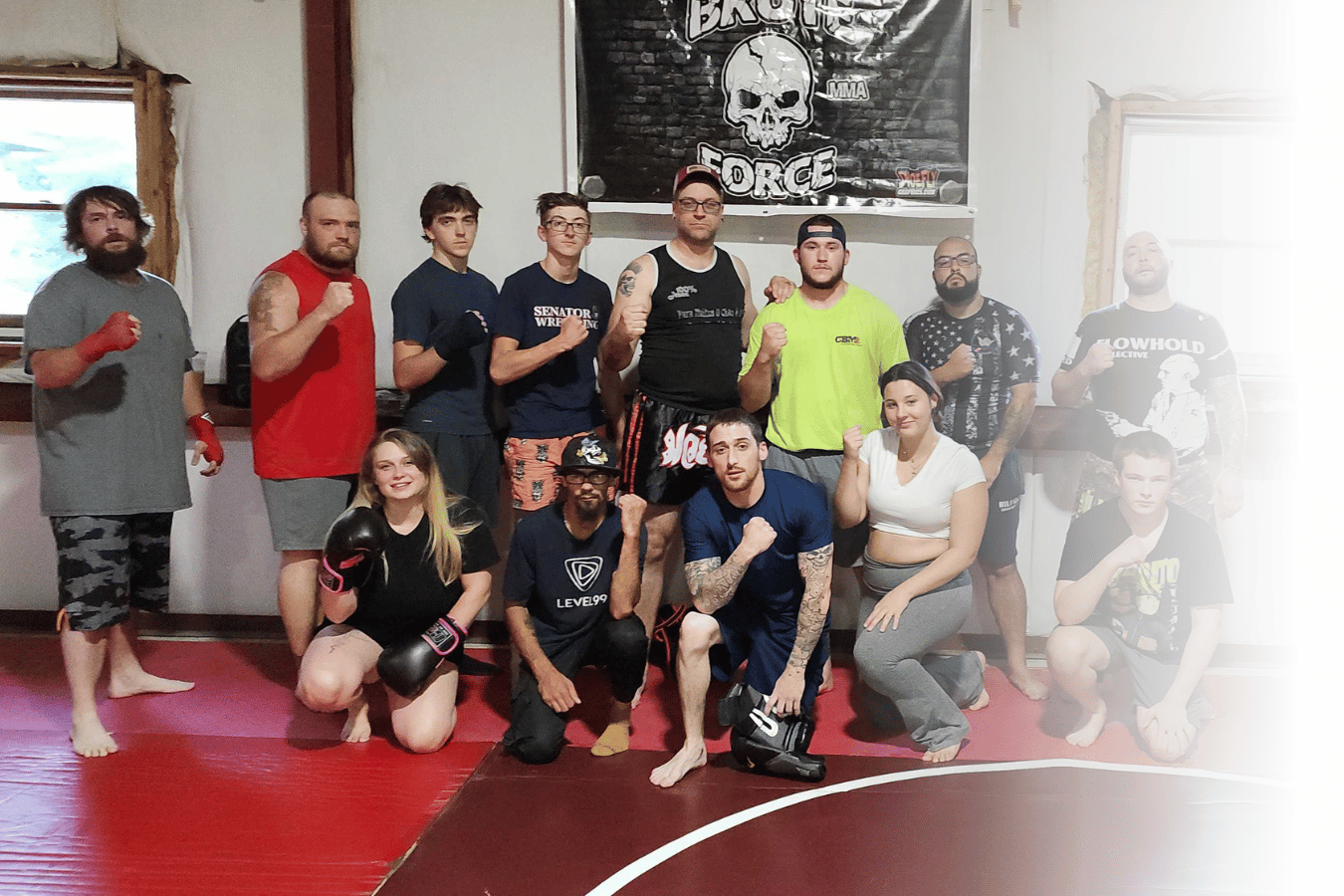
You’ll still have stressful days. We all do. The difference is that you’ll have a place to process that stress constructively, with structure, guidance, and a team around you.
Take the Next Step
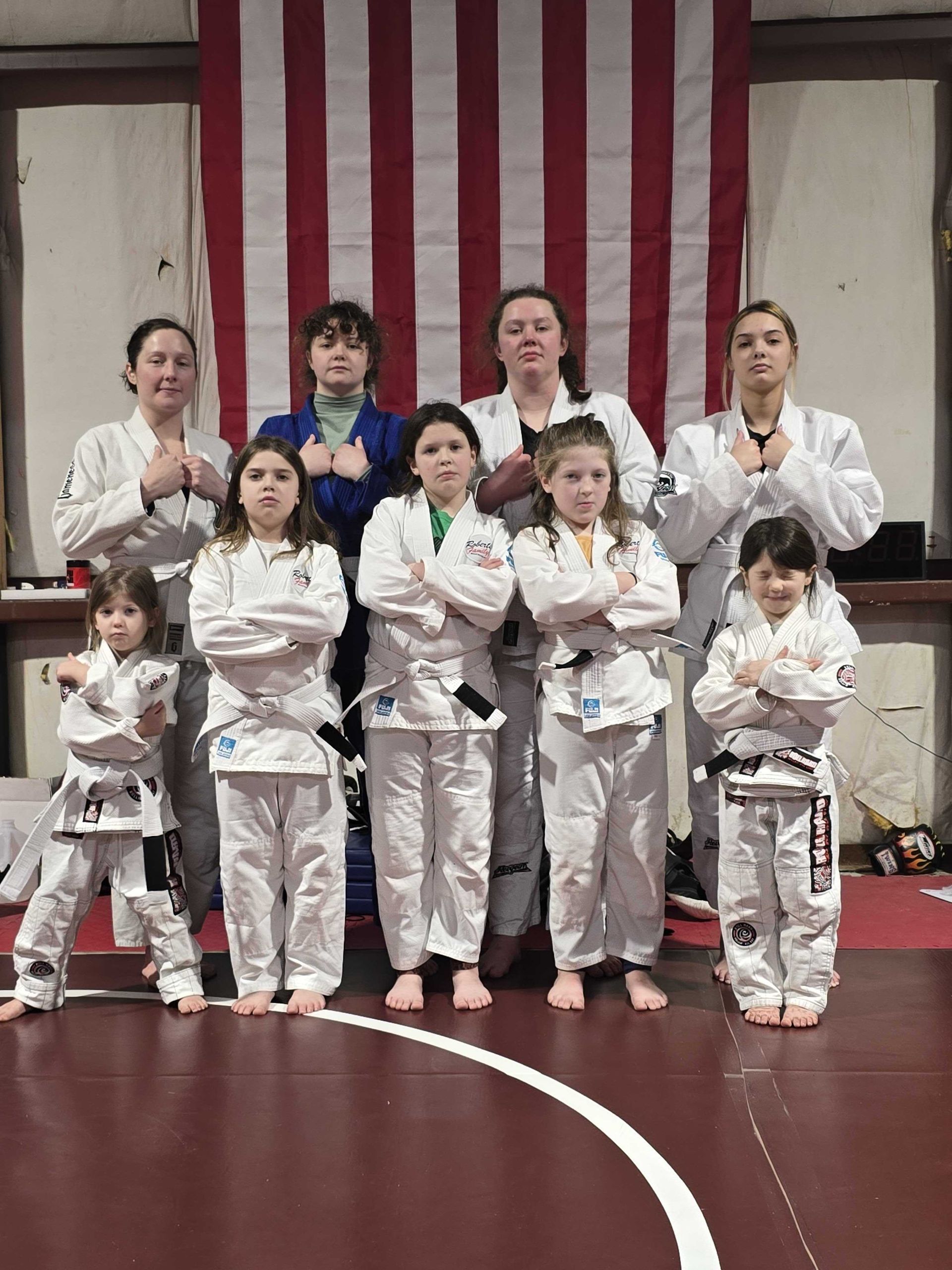
If you want Jiu jitsu training that’s challenging without being chaotic, and practical without being overwhelming, we built our adult program to meet you right where you are. At Roberts Family Mixed Martial Arts in Orange, MA, we focus on turning daily stress into steadier breathing, sharper decision-making, and real physical capability that you can feel after every session.
Whether your goal is fitness, confidence, self-defense, or simply having one part of the week that’s just for you, we’ll help you train safely and consistently and keep improving in a way that fits real adult life.
Train consistently and see real improvement by joining a martial arts program at Roberts Family Mixed Martial Arts.
ACCESS OUR SCHEDULE
& EXCLUSIVE WEB SPECIAL
Secure your spot and get started today with our EXCLUSIVE offer!