
Jiu jitsu gives you a place to set your day down, focus hard for an hour, and walk out feeling lighter and more alive.
Stress shows up in the body before we even have time to explain it. Tight shoulders, shallow breathing, restless sleep, and that low-grade feeling of being switched on all the time. One reason jiu jitsu works so well for stress relief is that it asks for your full attention in a way most workouts do not. When you are learning positions, balance, and timing, your brain does not have much room left for replaying emails or worrying about next week.
In our Orange, MA classes, we see the same pattern again and again: people arrive carrying the day, then leave with a steadier kind of energy. Not the jittery, over-caffeinated buzz, but the calm you get after using your body for something real and challenging. If you are looking for a practical way to reset your nervous system while building skills, jiu jitsu Massachusetts training can be a surprisingly good fit.
What makes this style of training different is that it is both physical and mental. You are moving, breathing, problem-solving, and adapting in real time. That combination is exactly what many adults need when stress has started to feel like a permanent background noise.
Why stress relief is a real outcome of jiu jitsu, not just a nice idea
There is research behind the mental health benefits people report from training. In studies of adult practitioners, most participants describe noticeable improvements in mood and anxiety. One finding that stands out: 87.5 percent of adults in a study reported that jiu jitsu reduced anxiety, and 96.9 percent reported improved mood. That lines up with what we hear from students who train consistently and start noticing the difference in their day-to-day patience, sleep, and focus.
The reason it helps is not mysterious, but it is layered. Training challenges your body like any demanding exercise, which can lower stress over time. At the same time, grappling forces you to be present. When you are trying to maintain posture, protect your balance, and work through a position safely, you are practicing a form of active mindfulness without having to sit still and think about being mindful.
It also helps that the environment is structured. You know what to expect: warm-up, technique, drilling, and controlled sparring. That routine can be grounding, especially when the rest of life feels unpredictable.
The physiology: how jiu jitsu can shift your stress chemistry
Stress is not only an emotion. It is chemistry and biology: cortisol, adrenaline, heart rate, breathing patterns, muscle tension. When stress becomes chronic, it can start to feel like your baseline. Physical training is one of the most reliable ways to interrupt that loop, and grappling does it with a unique intensity that most people do not get from a treadmill.
Research suggests jiu jitsu training can increase endogenous oxytocin and serotonin while reducing cortisol, the body’s primary stress hormone. The details are still being studied, but the practical takeaway is simple: consistent training can support a calmer internal state, and not just while you are on the mats.
There is another piece that matters. Learning to stay calm under pressure is literally part of the skill. If you tense up and hold your breath, you gas out. If you learn to relax, frame, and think, you last longer and you make better decisions. That physical lesson often turns into a mental one you can use outside the gym.
The mental reset: why jiu jitsu feels like switching tabs in your brain
Many adults try to relax by doing something passive, then wonder why their mind keeps spinning. Jiu jitsu is different because it is immersive. Your attention gets pulled into the present moment by necessity. You are listening to details, feeling weight shifts, adjusting grips, and reacting to real movement. It becomes hard to ruminate when you are focused on staying balanced and safe.
We teach in a way that helps you build that focus step by step. You learn a position, you drill it, you ask questions, you try again. Over time, you start recognizing patterns and making choices rather than just reacting. That sense of progress matters for stress, because stress often comes from feeling stuck.
If your job asks you to sit and think all day, training can be a welcome contrast. You are still thinking, but through movement. It is problem-solving with your whole body.
Energy that lasts: why you feel tired, then better
One of the first surprises adults mention is how training changes their energy. The first few classes can feel intense. Your muscles are working in ways that are new, and your brain is working too. But after you adapt, many people describe better energy during the day, not less.
That happens for a few reasons. Regular training improves cardiovascular capacity and muscular endurance, which makes everyday tasks feel easier. It also helps regulate sleep. When you use your body well, sleep tends to get deeper, and mornings get less brutal. And because training is structured, it often nudges people into better routines around hydration, meals, and recovery. Those things sound simple, but they add up fast.
The goal is not to leave every class wrecked. The goal is to train consistently. We would rather see you show up two or three times a week and build momentum than go too hard once, disappear for a month, and start over.
Community matters more than most people expect
A striking research finding is that 100 percent of participants in one study reported a strong sense of community through jiu jitsu. That social support is not just a nice perk. It is a real factor in stress resilience. When you feel connected, stress becomes easier to carry.
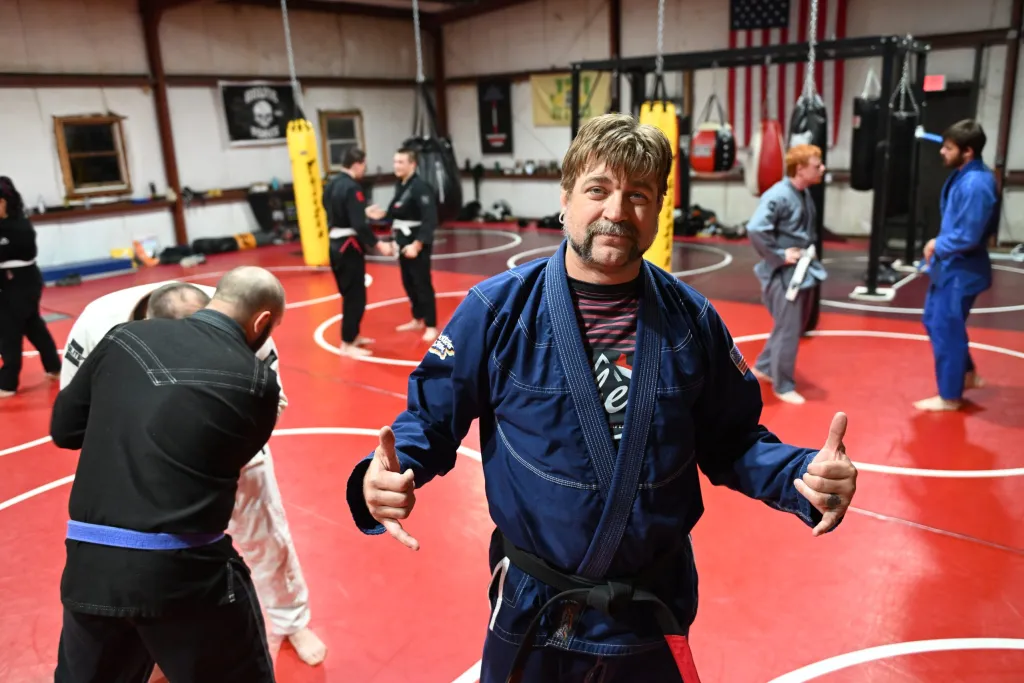
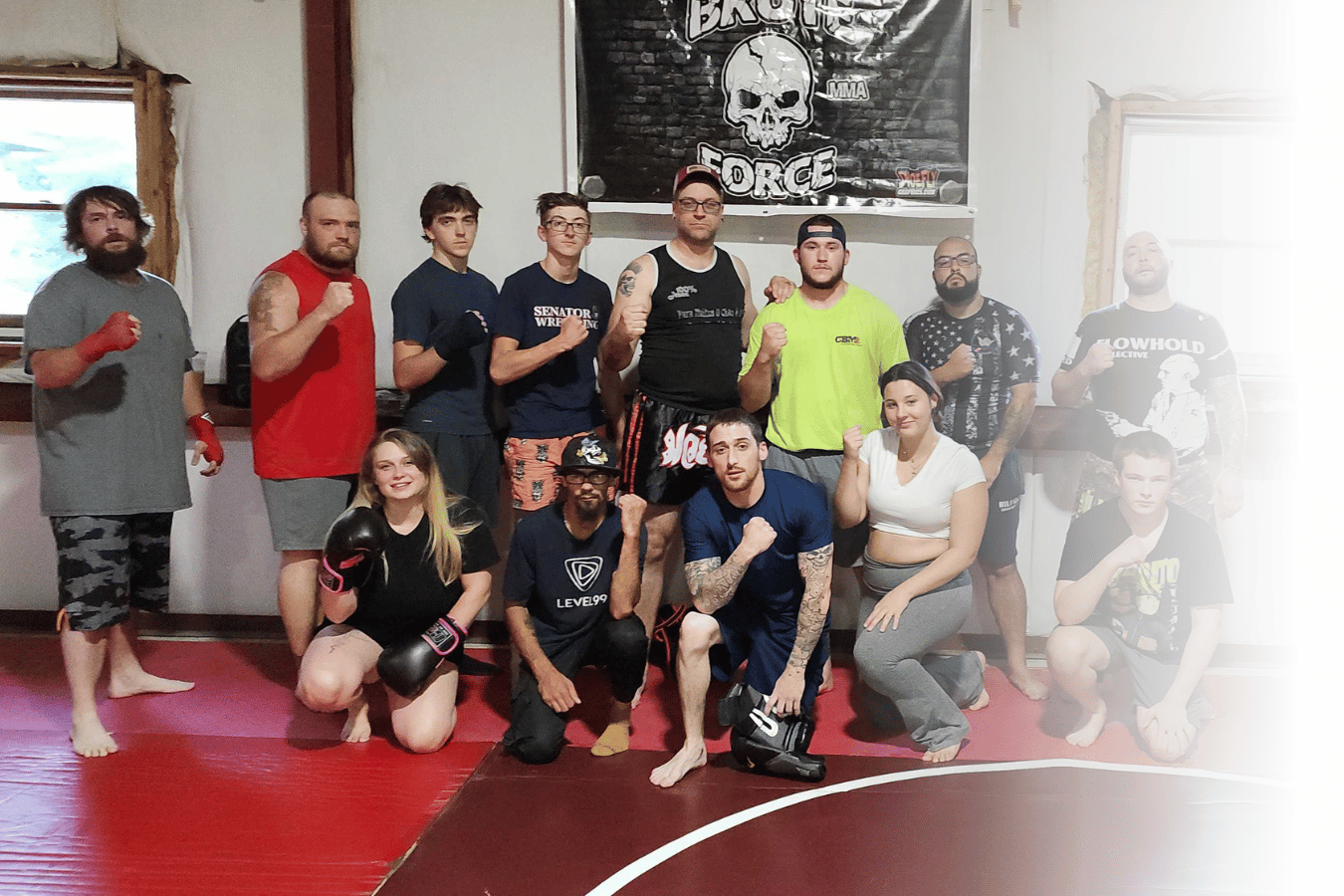
In our adult jiu jitsu Orange MA classes, the social side tends to grow naturally. You drill with partners, you learn each other’s pace, and you start recognizing familiar faces. There is conversation before class, quick laughs between rounds, and that mutual respect that shows up when everyone is doing hard things together.
You do not have to be loud or outgoing to benefit from it. Plenty of people start quietly, focus on training, and still end up feeling like they belong. That matters on the days when motivation is low and stress is high.
What a typical adult class feels like, from warm-up to cooldown
If you have never trained before, the unknown can be stressful by itself. A clear picture helps. A typical session includes a warm-up that prepares your joints and muscles for grappling movements. Then we teach techniques with context, meaning we explain what you are trying to accomplish and why small details matter.
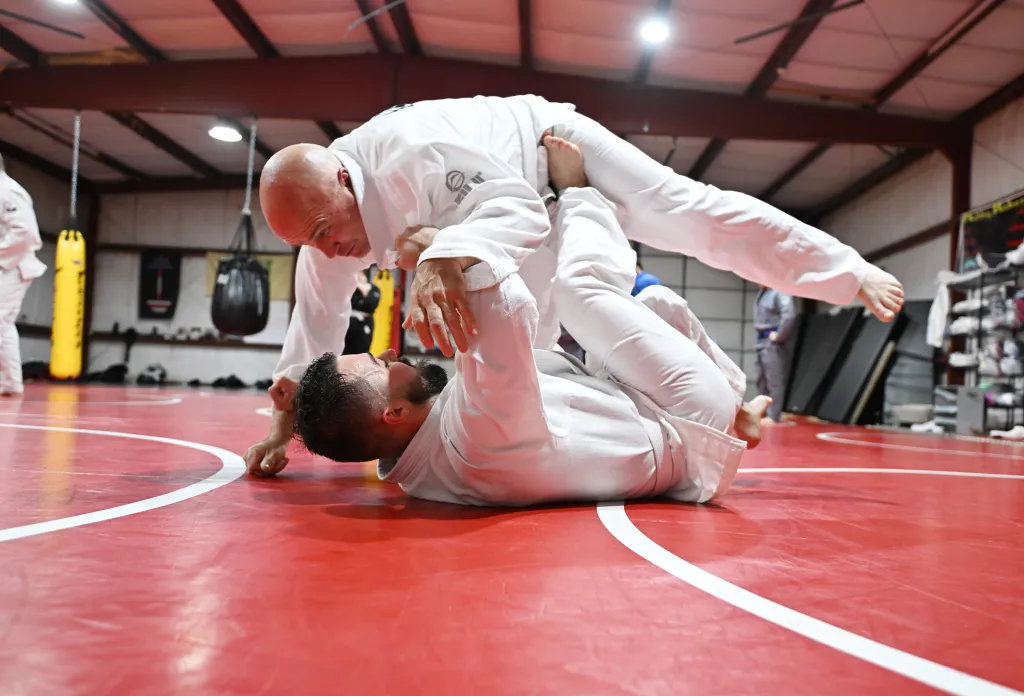
After technique, you drill. Drilling is where learning sticks. You repeat the movement with a partner in a controlled way, so your body starts to remember it. Depending on the class, there may be positional sparring or live rolling. That is where you apply what you are learning, but with safety and control as the priority.
You will sweat. You will think. You might feel awkward at first, and that is normal. Most adults do. Then, usually sooner than expected, things begin to click.
How jiu jitsu teaches emotional control under pressure
One reason grappling helps with stress is that it trains emotional regulation in a very direct way. If you panic, you waste energy. If you get frustrated, you stop seeing options. If you breathe, stay patient, and keep working, you find openings.
Those lessons transfer. People tell us they handle conflict better, or they stop taking minor annoyances as personally. Not because training makes life perfect, but because you practice staying composed while your heart rate is up. That skill is rare, and it is useful.
This also builds confidence. In research, 87.6 percent of participants reported increased confidence from jiu jitsu. Confidence does not mean feeling invincible. It usually means feeling capable, which is a much healthier thing to carry into daily life.
Stress relief without beating up your body: the role of technique and pacing
Adults often worry about injuries, and that is a fair concern. The good news is that jiu jitsu is heavily technique-driven. You can train intelligently, choose training partners who match your pace, and focus on learning rather than proving something every round.
We coach you to tap early, communicate clearly, and prioritize control. We also encourage a gradual approach: build fundamentals, get comfortable, then increase intensity when you are ready. You do not need to be in elite shape to start. You need consistency and a willingness to learn.
If you are returning to exercise after a long break, training can actually be a gentler re-entry than high-impact workouts, as long as you respect the learning curve and recover properly.
Practical ways to get more stress relief from your training
You can make your training time even more effective for stress relief by approaching it with a simple plan:
• Show up with one small focus for the day, like breathing steadily or improving your posture, so your mind has a clear target
• Train at a sustainable pace so you leave class energized instead of depleted, especially in your first month
• Treat drilling as skill practice, not a test, because repetition is what creates confidence and calm
• Pay attention to recovery basics like hydration and sleep, since stress improves faster when your body can actually rebuild
• Keep your training consistent, even if it is just two sessions per week, because rhythm beats intensity for long-term change
These habits are straightforward, but they change how training feels. Instead of another thing that drains you, the mats become a reset point in your week.
Why adults in Orange, MA choose jiu jitsu for energy and balance
Orange is the kind of place where life can feel busy in a quiet way. Work, commuting, family schedules, and the constant mental load add up. Adult training gives you a dedicated space to move, learn, and interact with people who are also trying to take care of themselves.
When you train consistently, you build a body that handles stress better and a mind that stays calmer under pressure. You also gain a skill set that is practical and measurable. That combination is rare in fitness. You can feel your conditioning improve, and you can also see your technique improve week to week.
If you have been searching for an activity that gives you both stress relief and real energy, jiu jitsu tends to deliver, especially when you commit long enough to get past the beginner awkwardness and into steady progress.
Ready to Begin
If your goal is stress relief that actually sticks, jiu jitsu is one of the most practical paths we know: it combines hard physical work, focused problem-solving, and a community that keeps you grounded. At Roberts Family Mixed Martial Arts, we build our training around safe structure, steady progress, and an environment where adults can train seriously without feeling like you have to be anything other than a beginner at first.
Whether you are specifically searching for adult jiu jitsu Orange MA options or you are simply looking for jiu jitsu Massachusetts training that supports mood, energy, and confidence, we invite you to start with one class and see how your body and mind respond over a few weeks.
Experience how martial arts builds confidence and resilience by joining a class at Roberts Family Mixed Martial Arts.
ACCESS OUR SCHEDULE
& EXCLUSIVE WEB SPECIAL
Secure your spot and get started today with our EXCLUSIVE offer!